
The First Council of Nicaea met in AD 325 to answer a question raised by the priest Arius: is the Son of God truly God, or something God made? More than 250 bishops came. Their creed says the Son is “of one substance with the Father,” and in the end only two of them refused to sign it. (Eusebius, Life of Constantine 3.8; Theodoret, Ecclesiastical History 1.6)
325: the bishops on the roads, and one question
The year is 325. On the roads of the Roman Empire, old men are travelling. They come from Egypt and from Syria, from Greece and from Spain, and one from as far as Persia, outside the empire (Eusebius, Life of Constantine 3.7).
Look at them closely. One has no right eye. One cannot open his hands, because they were burned with a red-hot iron. A few years before, soldiers had hunted these men on these same roads. Now the emperor sent them his own horses (Life of Constantine 3.6).
They were bishops, more than two hundred and fifty of them, all going to one small city by a lake, Nicaea, to answer one question: who is Jesus?
Maybe you have heard that this meeting invented the idea that Jesus is God. That it was decided by a close vote. That it chose the books of the Bible. None of that is true. What really happened is a far better story, and it begins seven years earlier, with a song.
The song: Arius in Alexandria, about 318
Alexandria, in Egypt, was one of the greatest cities in the world, and its church was one of the oldest. Around the year 318, in one of its districts by the harbor, there was a priest everyone loved. His name was Arius. He was tall and thin, he lived simply, he spoke gently, and he was a brilliant teacher (Epiphanius, Panarion 69).
One day his bishop, an old man named Alexander, was teaching about the Father and the Son, and Arius stood up against him. If the Father begot the Son, he said, then the Son had a beginning. And if He had a beginning, then there was a time when the Son did not exist (Socrates, Church History 1.5).
It sounds like a small thing. It isn’t. Arius was saying that Jesus is not God in the way the Father is God: that He is the first and greatest thing God ever made. Higher than the angels, but made.
And Arius knew how to spread an idea. He put his teaching into songs. A later historian who admired him says Arius wrote songs “to be sung by sailors, and by millers, and by travellers along the high road” (Philostorgius 2.2). Soon you could hear it in the markets and on the docks: there was a time when He was not. Athanasius later copied out lines from Arius’s book of verses, the Thalia, to show what it taught (Against the Arians 1.5–6).
Why it mattered: a hymn to Christ, as to a god
Why did that hurt Christians so deeply? Because of what they had always done.
About the year 112, a Roman governor, Pliny the Younger, arrested some Christians and wrote to the emperor Trajan about what he found. He says they met before dawn on a fixed day and would “recite a hymn among themselves to Christ, as though He were a god” (Pliny, Letters 10.96, capitals ours).
In Rome, someone scratched a drawing on a wall to make fun of a Christian. It shows a man praying to a figure on a cross. Under it are the words: Alexamenos worships his god (the Alexamenos graffito).
And in the Holy Land, at Megiddo, there is a floor from a Christian prayer hall about a hundred years older than the council. A woman named Akeptous paid for the table there, and the words in the floor say she gave it “to God Jesus Christ as a memorial” (the Megiddo inscription).
So this was nothing new. Thomas had said it to the risen Jesus, face to face: “My Lord and my God!” (John 20:28). Christians were baptized “in the name of the Father and of the Son and of the Holy Spirit” (Matthew 28:19). They prayed to Jesus, and many of them had died for Him, as we told in our film on the first Christian martyrs.
And here is the heart of it. If Jesus is a created being, then Christians had been worshiping something God made. And a created being cannot bring us to God. Only God can save. That was what was at stake.
The fire spreads, and Constantine’s letter
Bishop Alexander called together nearly a hundred bishops from Egypt and Libya. They said Arius’s teaching was false, and they removed him (Socrates, Church History 1.6).
But Arius didn’t stop. He wrote to a powerful friend, Eusebius, the bishop of Nicomedia, the emperor’s own city:
We are persecuted, because we say that the Son has a beginning, but that God is without beginning.Arius, letter to Eusebius of Nicomedia, in Theodoret, Ecclesiastical History 1.4, trans. Blomfield Jackson
His friend took his side. Other bishops did too. Letters flew from city to city. In the words of the historian Socrates, “thus from a little spark a large fire was kindled” (Church History 1.6). Bishop stood against bishop, and people argued in the streets. Eusebius of Caesarea says the quarrel was mocked “in the very theaters of the unbelievers” (Life of Constantine 2.61).
By now the empire had one ruler. Constantine had ended the persecution, as our film on Constantine tells, and he had just won the East. He was tired of war, and he wanted peace in the church. So he wrote one letter to Alexander and to Arius, to both at once. He told them they were fighting over “small and very insignificant questions,” and asked them to forgive each other (Life of Constantine 2.64–72). Then he added:
Restore me then my quiet days, and untroubled nightsConstantine, letter to Alexander and Arius, in Eusebius, Life of Constantine 2.72, trans. Ernest Cushing Richardson
It didn’t work. The answer came back: this is not small.
So Constantine did something no one had ever done. He called the bishops of the whole church to meet in one place. At first it was going to be Ancyra, in Galatia. Then he changed it, and his letter still exists, in a Syriac translation. Come to Nicaea instead, he wrote:
because the bishops from Italy and the rest of the countries of Europe are coming, because of the excellent temperature of the air, and in order that I may be present as a spectator and participant in what will be done.Constantine, letter to the bishops (Opitz, Urkunde 20), English adapted from Stevenson and Frend
The men who came: bishops with scars
They came in the early summer of 325. Each bishop could bring priests and helpers, so there may have been well over a thousand people on the roads to Nicaea. Eusebius, who was there, counted more than 250 bishops, while the priests, deacons and helpers with them were “altogether beyond computation” (Life of Constantine 3.8).
And who were they? Remember the year. The Great Persecution had ended only twelve years before. Most of these men had lived through it.
There was Paphnutius, from the deserts of Egypt: in the persecution, they had cut out his right eye. There was Paul, bishop of Neocaesarea, a fortress on the river Euphrates. A red-hot iron had been put to his hands, so he could no longer use them. Theodoret, the historian who tells us about them, looked at that hall and wrote:
In short, the Council looked like an assembled army of martyrs.Theodoret, Ecclesiastical History 1.6, trans. Blomfield Jackson
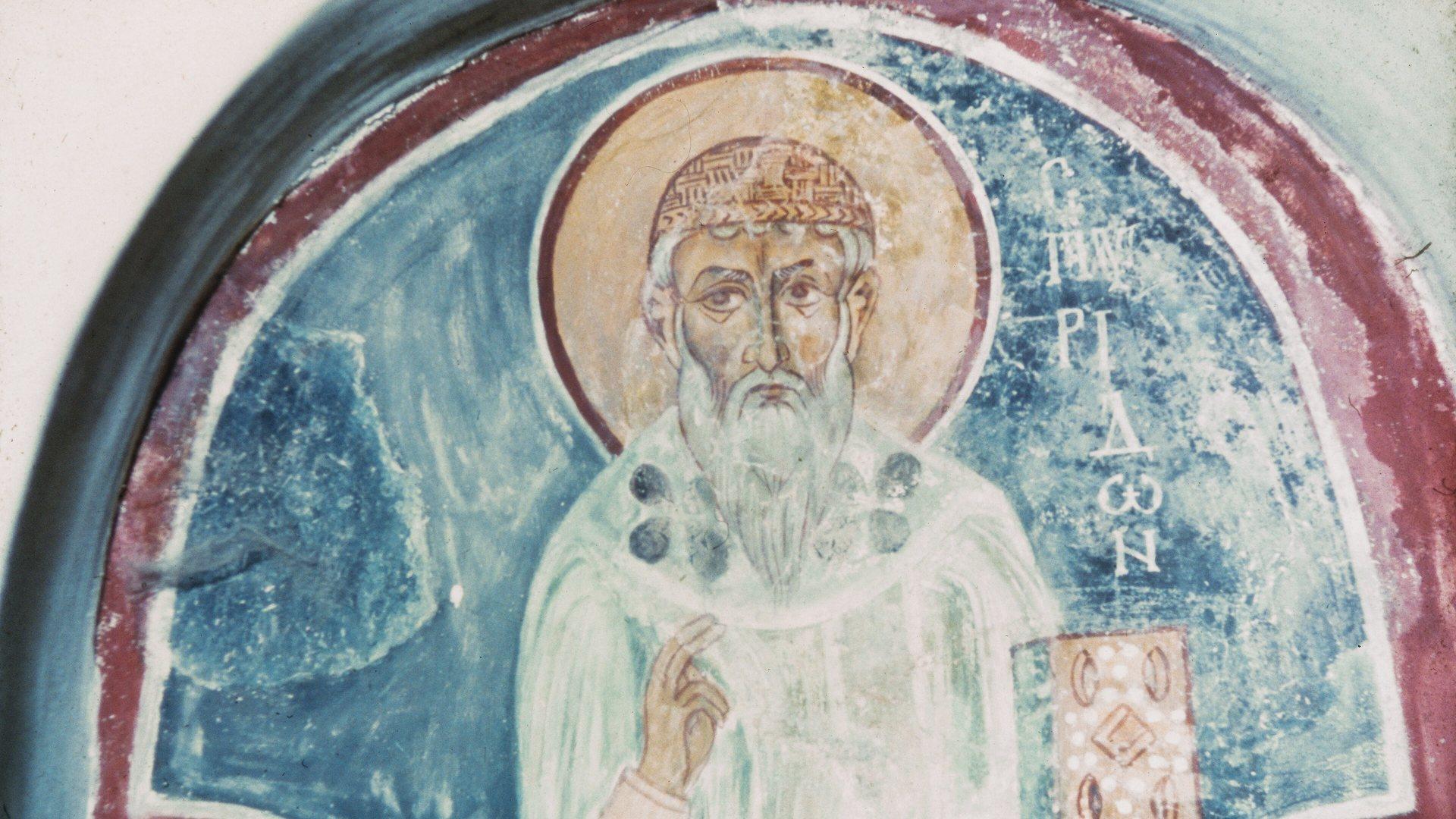
There was Spyridon, from Cyprus. He was a shepherd, and when they made him a bishop, he kept his sheep (Socrates, Church History 1.12).
The church also remembers Nicholas among them, the bishop of Myra. Yes, that Nicholas. A much later story says he was so angry at Arius that he struck him in the face.
There was one bishop from Persia, from outside the empire, and one from the Goths. Only a few came from the Latin West. The bishop of Rome was too old to travel, so he sent two priests in his place (Theodoret 1.6).
And at the side of old Bishop Alexander stood his helper, a deacon still in his twenties. He was small and quick. His name was Athanasius (Socrates 1.8). Remember that name.
The hall: the emperor and the burned complaints
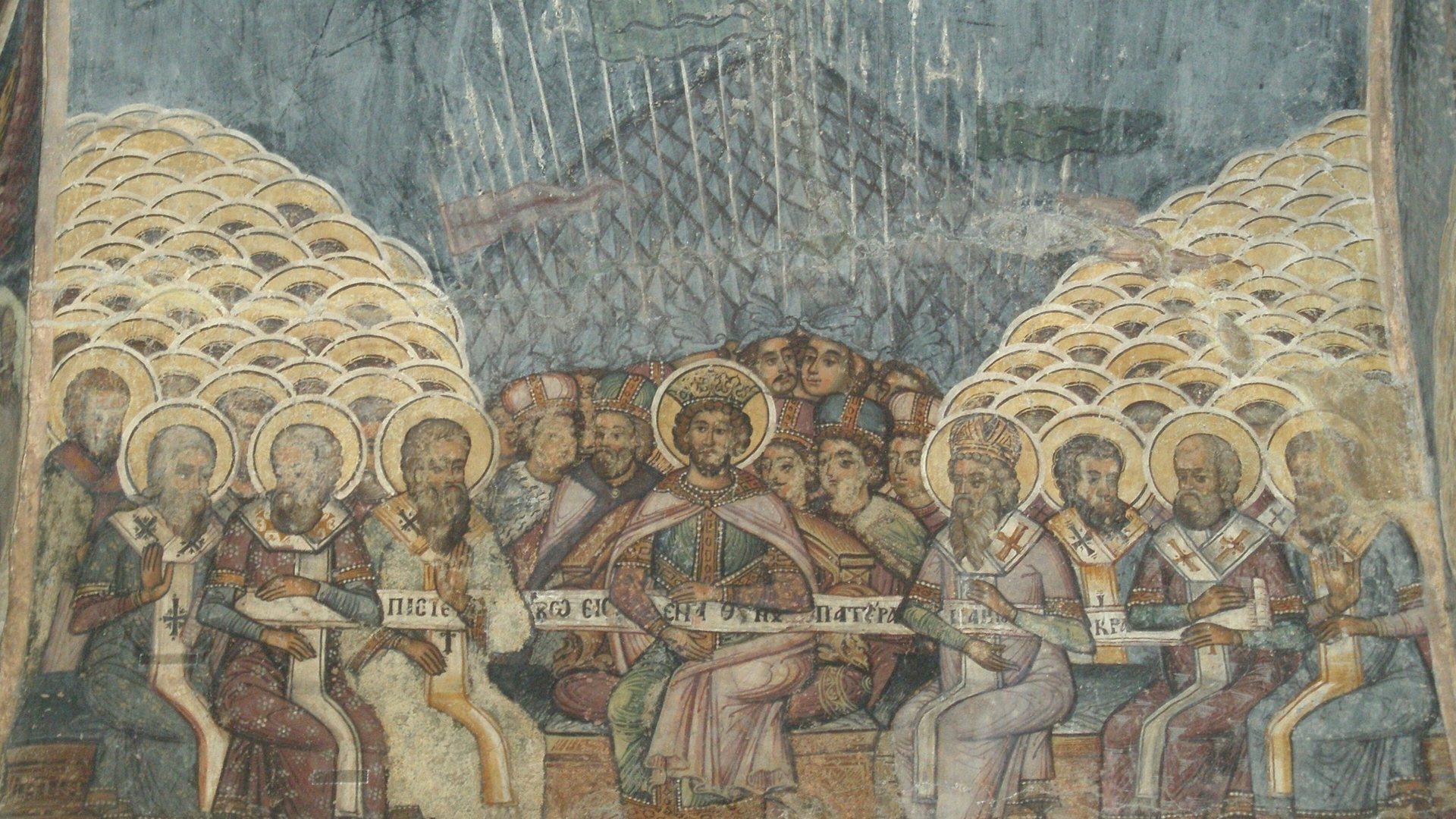
They met in the great hall of the emperor’s palace. The bishops took their seats in rows, on both sides (Theodoret 1.6).
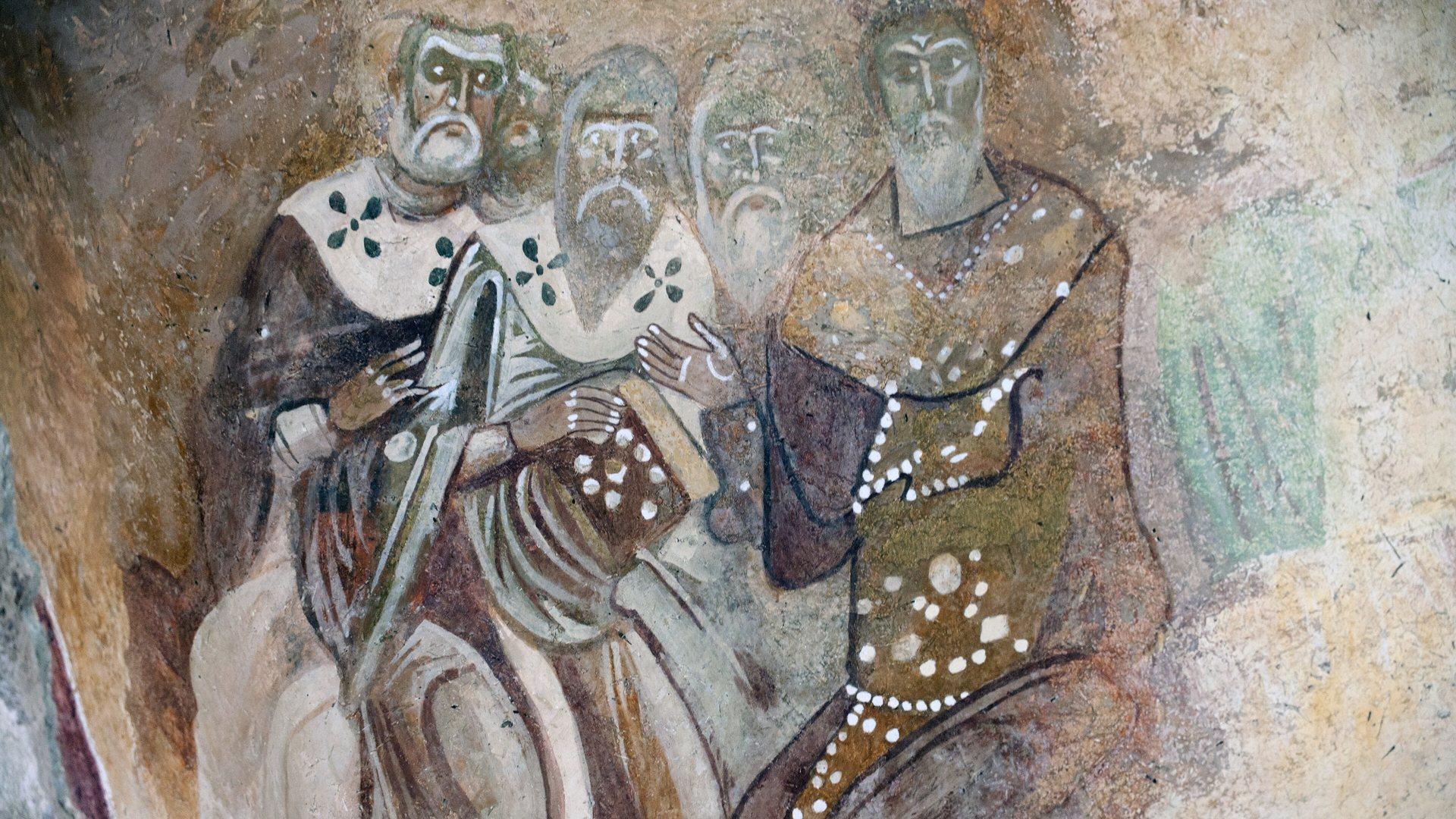
Then Constantine came in. Eusebius, who was in the room, says he walked through the middle of the assembly:
like some heavenly messenger of God, clothed in raiment which glittered as it were with rays of light, reflecting the glowing radiance of a purple robe, and adorned with the brilliant splendor of gold and precious stones.Eusebius, Life of Constantine 3.10, trans. Ernest Cushing Richardson
And this ruler of the world stood beside a low golden chair and waited until the bishops gave him a sign to sit (Life of Constantine 3.10).
Now, bishops are people too. Many of them had brought written complaints against each other, and they gave them to the emperor. He took them all and kept them sealed. Then, in front of everyone, he burned every one of them, and swore that he had not read a word (Theodoret 1.10). As Socrates tells it, he said that “Christ enjoins him who is anxious to obtain forgiveness, to forgive his brother” (Church History 1.8).
Then he spoke to them. A fight inside the church of God, he said, is worse than any war:
intestine strife within the Church of God, is far more evil and dangerous than any kind of war or conflictConstantine’s address to the council, in Eusebius, Life of Constantine 3.12, trans. Ernest Cushing Richardson
He asked them for one thing: peace. But what to say about the Son had to come from the bishops.
One word: homoousios and the Creed
So the debate began. Arius’s friends brought a written statement of what they believed. It was read out loud, and the bishops were so shocked that, Theodoret says, “as soon as it was read it was torn to pieces” (Ecclesiastical History 1.6).
But saying what was false was the easy part. Saying what was true was harder. Every time the bishops chose words from the Bible, Arius’s friends agreed to them. The Son is “from God”? Yes, they said: Paul writes that “all things are from God” (1 Corinthians 11:12). The Son is “the power of God” (1 Corinthians 1:24)? Yes, they said: the Bible uses that word for other things too.
Athanasius was in the hall, and he never forgot it. He says they were “caught whispering to each other and winking with their eyes” (On the Decrees of Nicaea 20).
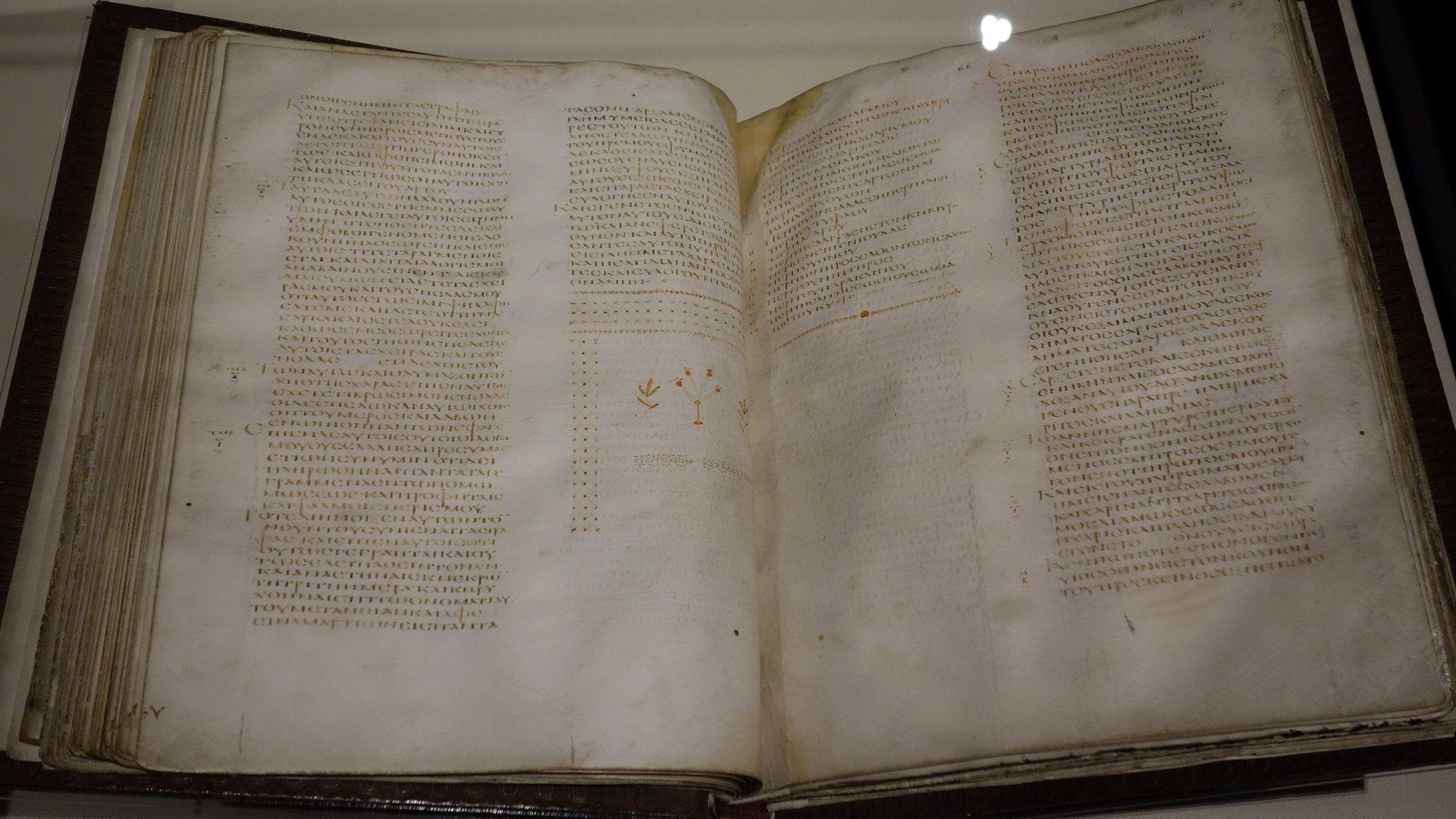
So the bishops needed a word that no one could twist. They found one. In Greek, homoousios. It means “of one being.” The Son is of one being with the Father. Whatever the Father is, the Son is. Not almost God. Not like God. God.
And they wrote it into a creed, a short statement of faith:
We believe in one God, the Father Almighty, maker of all things visible and invisible; and in one Lord Jesus Christ, the Son of God, the only-begotten of His Father, of the substance of the Father, God of God, Light of Light, very God of very God, begotten, not made, being of one substance (homoousion) with the Father.The Creed of Nicaea (325), trans. Henry R. Percival (capitals ours)
Begotten, not made: three words against all of Arius’s songs. The creed even ends by rejecting the line people had been singing in the markets, that “there was a time when the Son of God was not” (the Creed of Nicaea).
The count: only two refused, and three myths
Then came the moment to sign. And here is the first myth: people say it was close. It was not close.
More than 250 bishops were in that hall, and the church would remember the number as 318 (Athanasius, Letter to the Bishops of Africa 2). In the end, only two refused: Secundus of Ptolemais and Theonas of Marmarica. Two. They and Arius were sent away, into exile (Theodoret 1.6; Philostorgius 1.9).
The second myth: that this council made Jesus God. You have already seen the answer. Christians were singing to Christ as God two hundred years before Nicaea. The council did not invent that faith. It guarded it. These were men who had lost eyes and hands for that faith. They were not going to trade it for a new one because an emperor was in the room.
And the third myth: that Nicaea chose the books of the Bible. It didn’t. We have the creed, the letters and the rules from this council, and there is not one word in them about which books belong in the Bible (the Creed and Canons; the council’s letter, in Socrates 1.9). That story comes from the Synodicon Vetus, a summary of church councils written more than five hundred years later. It says all the books were laid by the altar, and the bishops prayed that the true ones would be found on top and the false ones underneath (Synodicon Vetus). In the version Voltaire made popular, the false ones fell to the floor. It never happened.
What else they decided: Easter and twenty rules
The council did other work too.
Until then, Christians in different lands kept Easter on different days. Some were still fasting while others were already feasting. From now on, the council said, the whole church would keep the day of the Lord’s resurrection together (the council’s letter, in Socrates 1.9).
And they wrote twenty short rules for church life, called canons. A minister must not lend money for profit (canon 17). Those who had denied the faith in the persecution could come back, with time and with mercy (canons 11 and 12). And on Sundays Christians should pray standing, not kneeling (canon 20), because Sunday is the day Jesus rose (the Canons of Nicaea).
One decision tells you a lot about these men. Some wanted a rule that married ministers must live apart from their wives. And Paphnutius stood up: the old monk with one eye, who had never married. He begged them, says Socrates:
not to impose so heavy a yoke on the ministers of religion: asserting that ‘marriage itself is honorable, and the bed undefiled’Socrates, Church History 1.11, trans. A. C. Zenos
And the council listened to him.
Then the emperor asked them all to dinner. And the church remembered what he did when he came to the men whose eyes had been cut out: “he placed his lips upon the wounds” (Theodoret 1.10; Socrates 1.11).
It wasn’t over: 359, Athanasius and 381
You might think that was the end. It wasn’t.
Within a few years, Arius’s friends were back at the emperor’s side, and Arius himself was called home from exile. After Constantine died, his son took Arius’s side with all the power of the empire. Council after council wrote new statements of faith, and left out the word from Nicaea.
In the year 359, at Ariminum in Italy, hundreds of bishops, tired and afraid, signed one of them. Jerome, who lived through those years, put it like this:
The whole world groaned, and was astonished to find itself Arian.Jerome, Dialogue Against the Luciferians 19, trans. W. H. Fremantle
And the deacon from Alexandria? Athanasius was a bishop now, and he would not sign. He was sent into exile five times, by four emperors. He hid in the desert with the monks. People said it was Athanasius against the world. He never gave in.
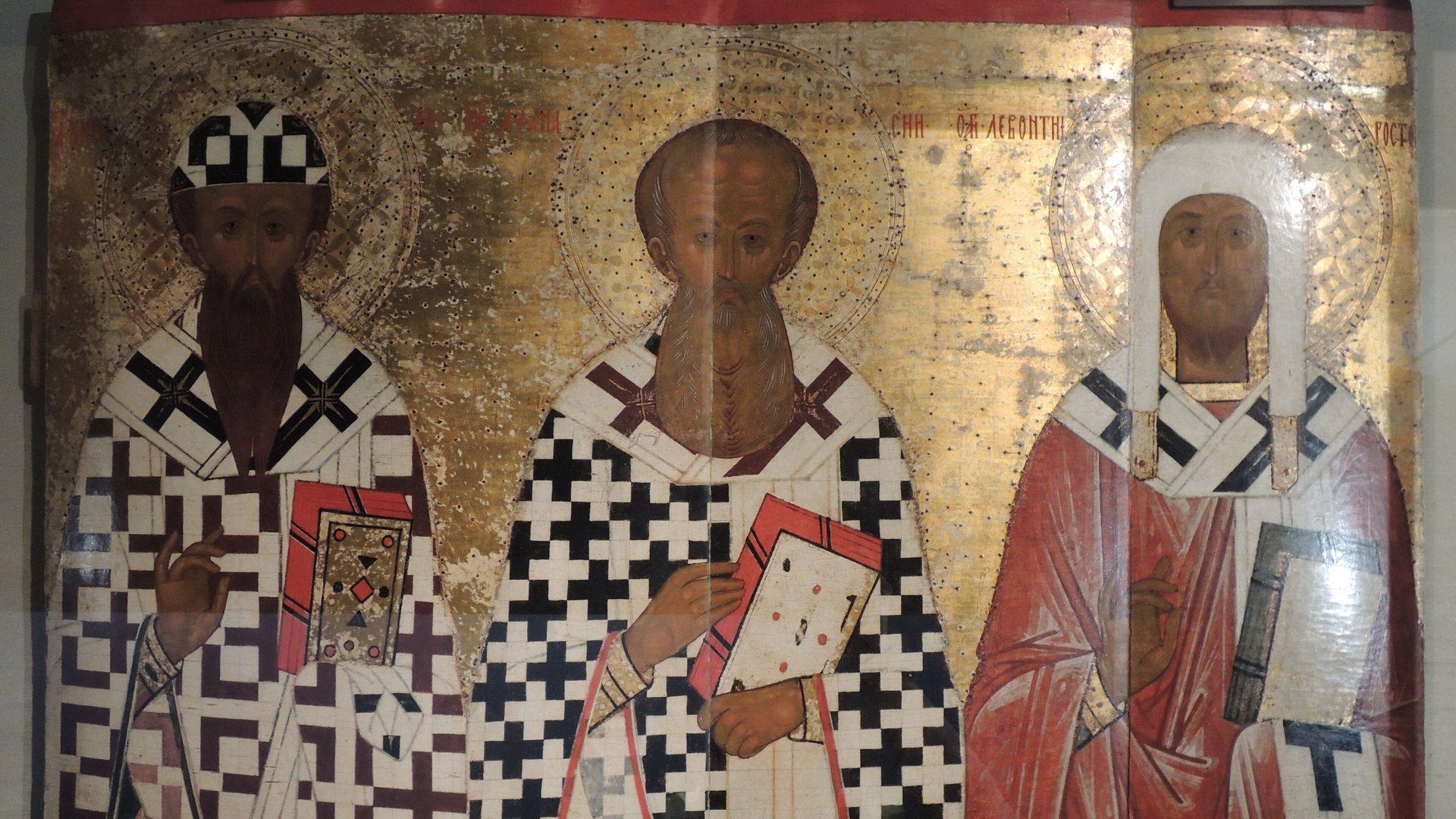
In the year 381, eight years after his death, a second great council met in Constantinople. It took the faith of Nicaea and finished it, with the words about the Holy Spirit that our film on the Trinity explains. That story needs a film of its own.
The lake: the church under the water
Nicaea is still there. Today it is a small town in Turkey called İznik. The old walls still stand around it. The palace where the bishops met is gone.
But in 2014, photos taken from the air showed something under the water of the lake, close to the shore: the walls of a church. It was built in the century after the council. Then an earthquake brought it down, and the lake covered it (the basilica in Lake İznik).

And the words are still here. Every Sunday, in almost every language on earth, Christians stand and say them: Orthodox, Catholic and Protestant. People who agree on little else agree on this.
Seventeen hundred years ago, men with scars from the persecution walked into a hall and were asked who Jesus is. This is what they answered:
Who for us men and for our salvation came down and was incarnate and was made man. He suffered and the third day He rose againThe Creed of Nicaea (325), trans. Henry R. Percival (capitals ours)
True God from true God.
The picture at the top of this page: the First Council of Nicaea, icon at the Great Meteoron Monastery, Meteora, Greece. Photo Jjensen, Wikimedia Commons, CC BY-SA 3.0.