In Nicene Christianity, the Father, the Son, and the Holy Spirit are three distinct persons who share one divine being. Matthew’s baptismal formula names all three. The bishops at Nicaea later addressed a specific question about the Son and his relationship to the Father. (Matthew 28:19, Creed of Nicaea)
The Jordan River
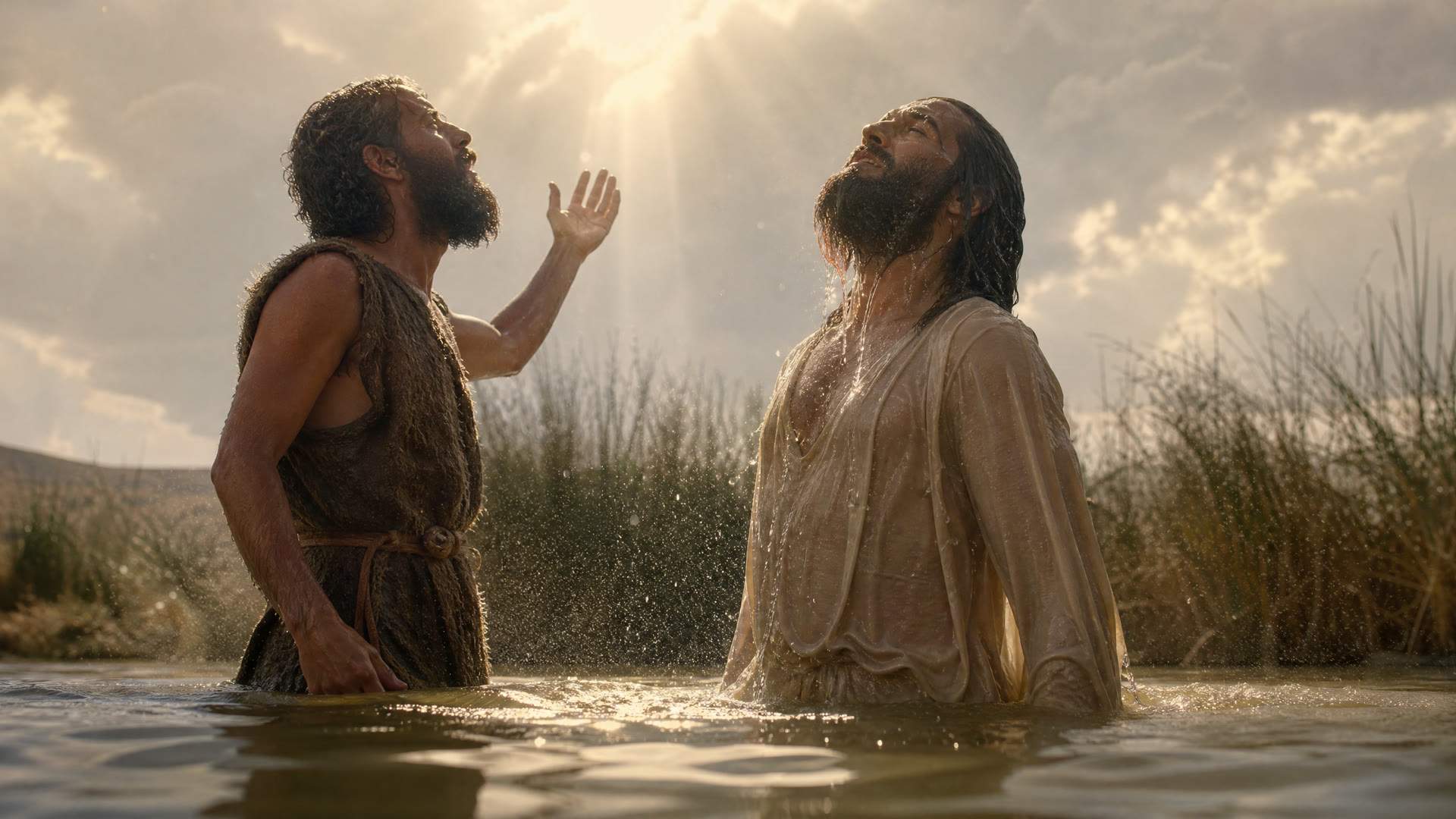
Two thousand years ago, a preacher named John stood in the Jordan River and baptized a man from Nazareth. What happened next, John never forgot:
I have seen the Spirit descending like a dove out of heaven, and it remained on him.John 1:32, World English Bible
And Matthew writes that a voice came out of the heavens: “This is my beloved Son, with whom I am well pleased” (Matthew 3:16–17).
John was a Jew. Like every faithful Jew, he knew by heart the prayer called the Shema:
Hear, Israel: Yahweh is our God. Yahweh is one.Deuteronomy 6:4, World English Bible
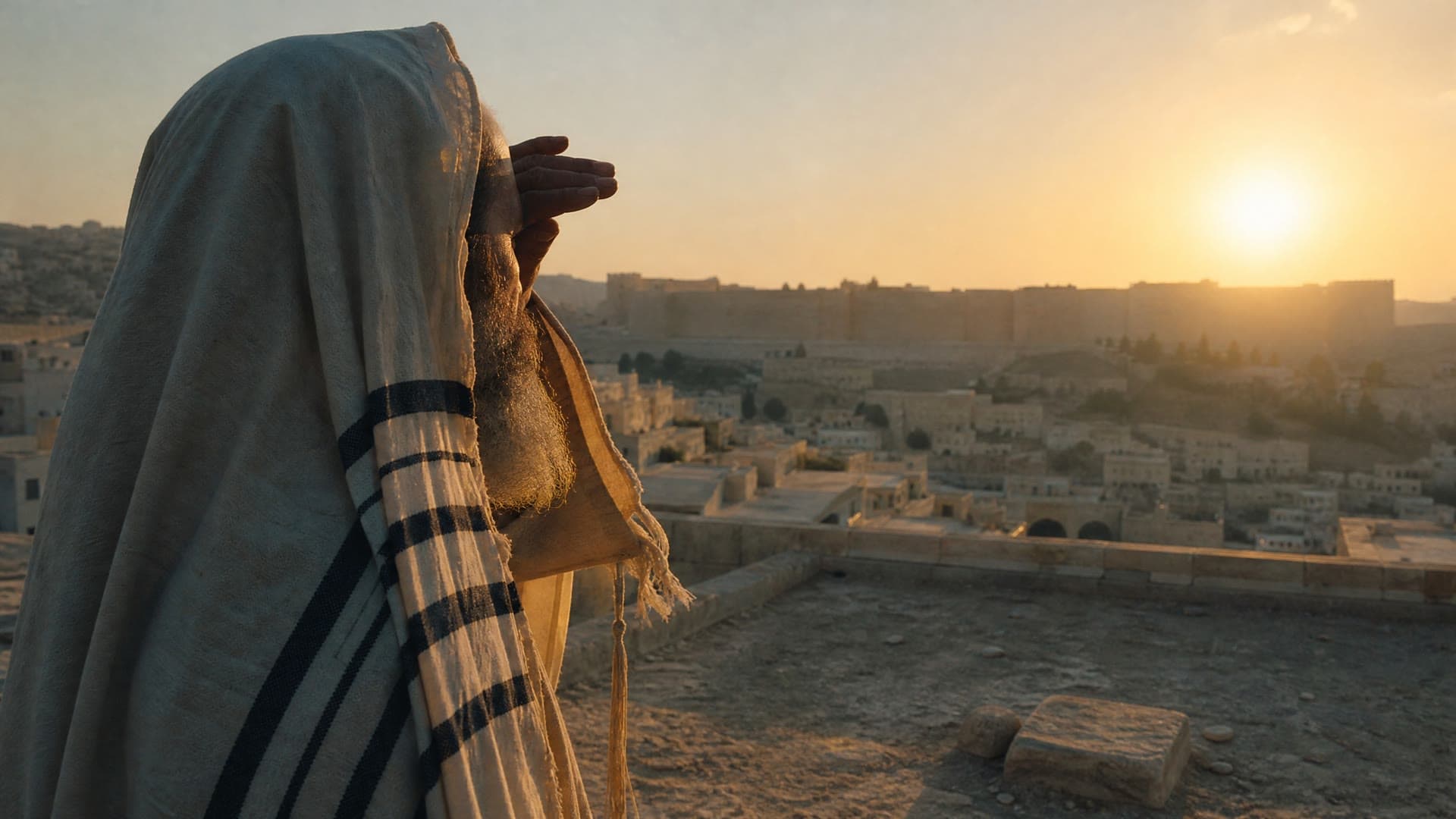
John never stopped believing that God is one. Neither did the first Christians. But after that day at the river, they began to see something new about the one God. He is one, but he is not alone.
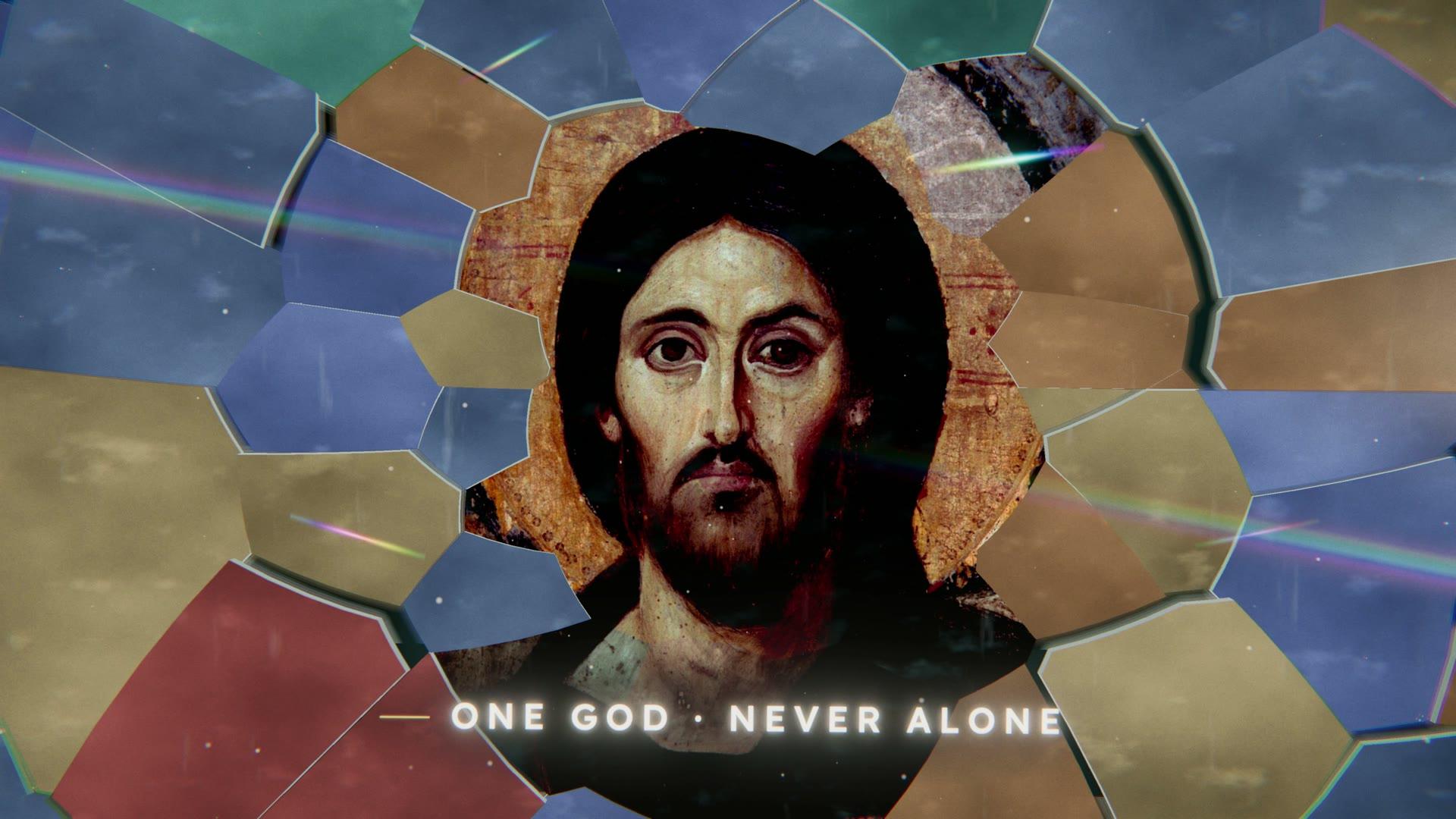
Christians call this the Trinity. Almost everyone has heard the word. Very few can explain it. This page follows the film: what it really means, the four wrong answers people keep giving, and why, to Christians, it shows how great God is.
One God
The Roman world was crowded with gods. Every city had its patron god and every household its spirits. Rome even had a goddess of door hinges. In the middle of all that lived the Jews, with one God and no statues of him at all. One God. No rivals. No images. No exceptions.
Our Lord, come
The first Christians were Jews, and they prayed the Shema too. Yet within a few years of Jesus’ death, they were doing something no faithful Jew had done before: they were praying to him.
One of the oldest Christian prayers we have is not even in Greek. It is in Aramaic, the language Jesus spoke: Maranatha, “Our Lord, come.” Paul quotes it in a letter from the 50s (1 Corinthians 16:22). In the same letter he takes the two key words of the Shema, “God” and “Lord,” and opens them up:
There is one God, the Father, of whom are all things… and one Lord, Jesus Christ, through whom are all things.1 Corinthians 8:6, World English Bible
Jesus was not promoted to God centuries later. Within about twenty years of the cross, Jewish believers were placing him inside the one God of Israel. The worship came first. The explanations came later.
Before the world
So who was this Jesus they prayed to? Listen to him pray. On the night he was arrested, in a garden, he calls God Abba, the everyday word for “father” in his own language: “Abba, Father… not what I desire, but what you desire” (Mark 14:36).
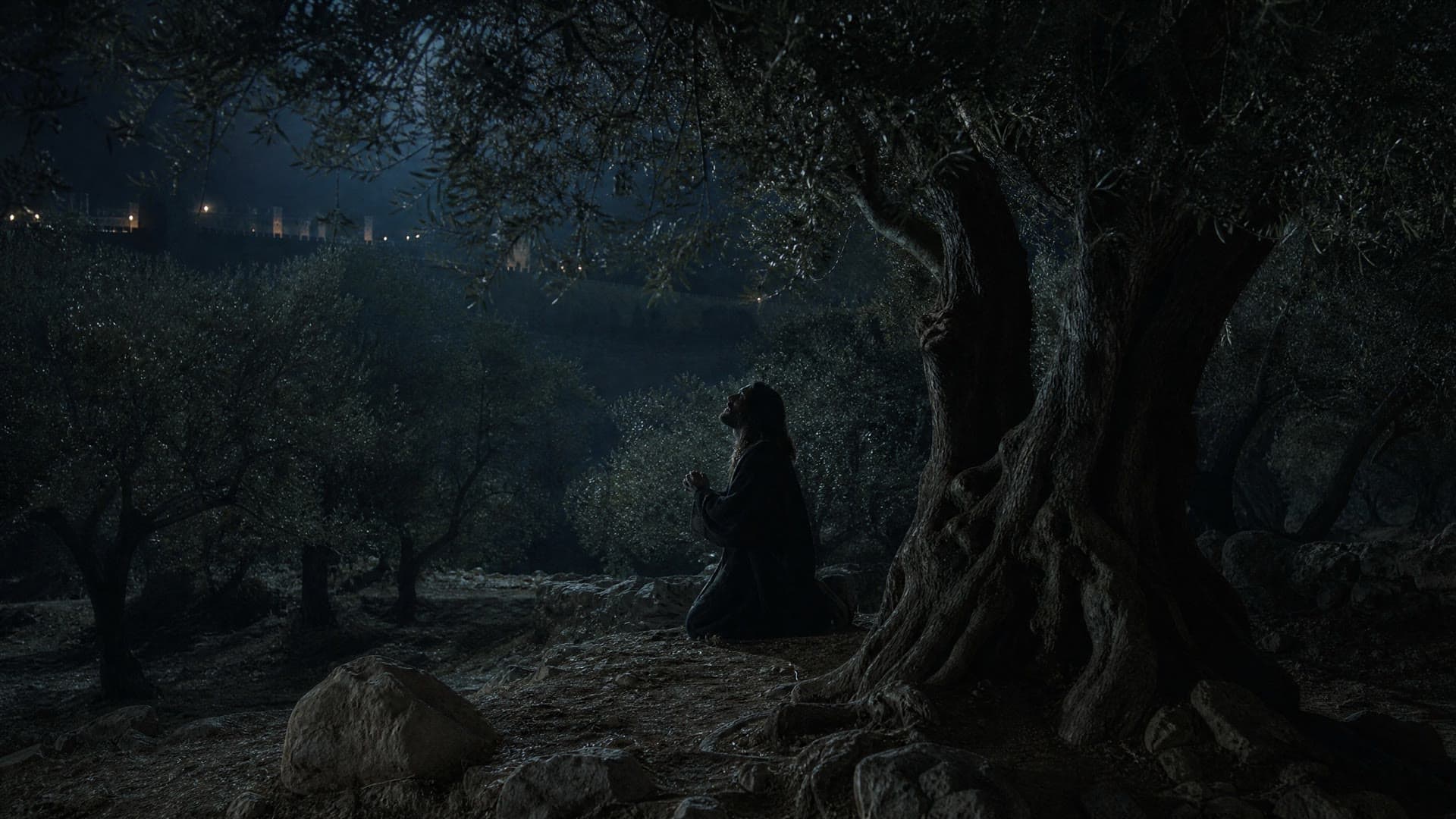
Earlier that night he had prayed out loud for his friends, and he said something only a Son could say:
Father… you loved me before the foundation of the world.John 17:24, World English Bible
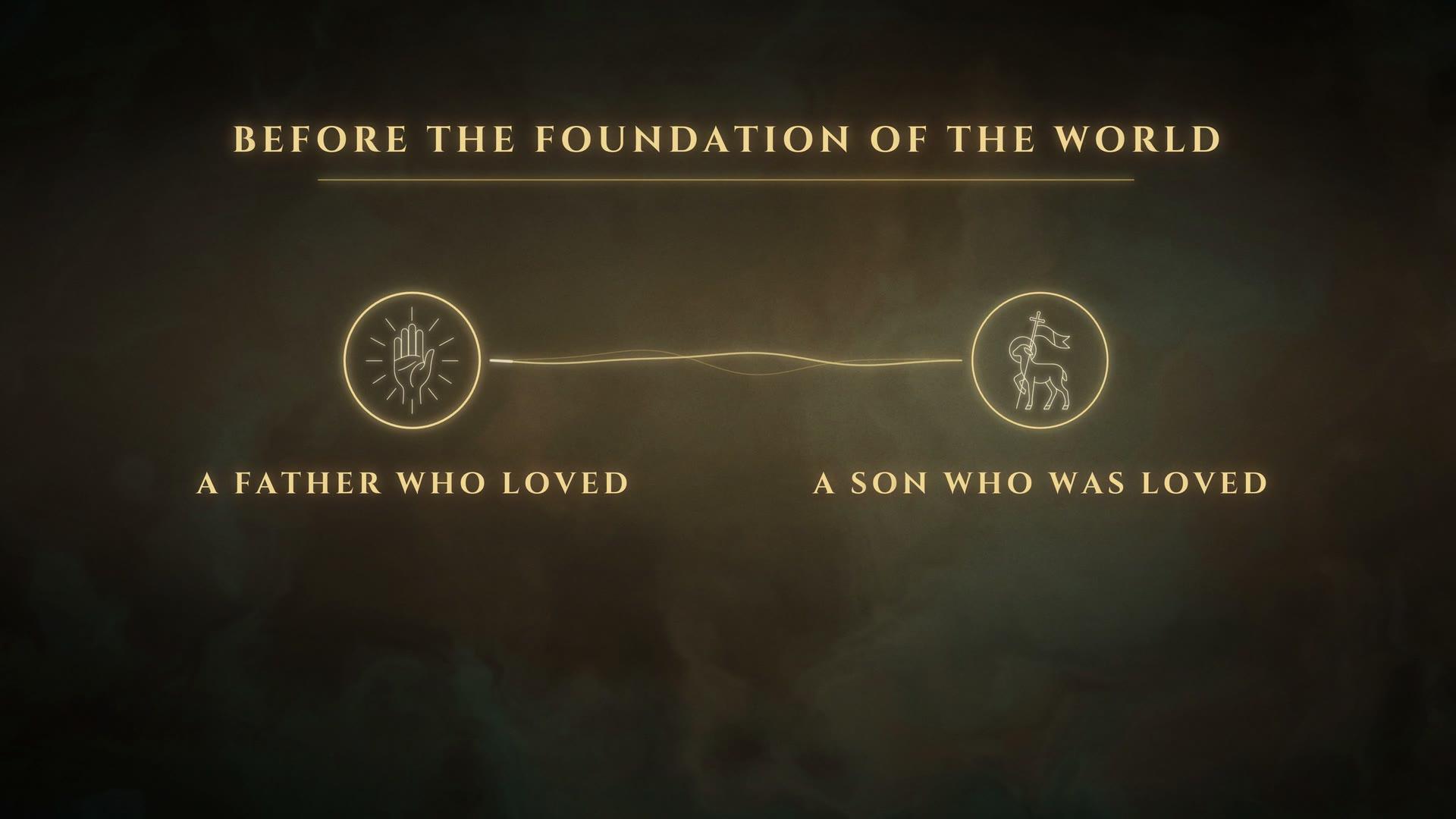
Long before the first day of creation, there was a Father who loved, and a Son who was loved. Jesus was not a creature speaking to his maker. He was a Son, speaking to the Father who had always loved him.
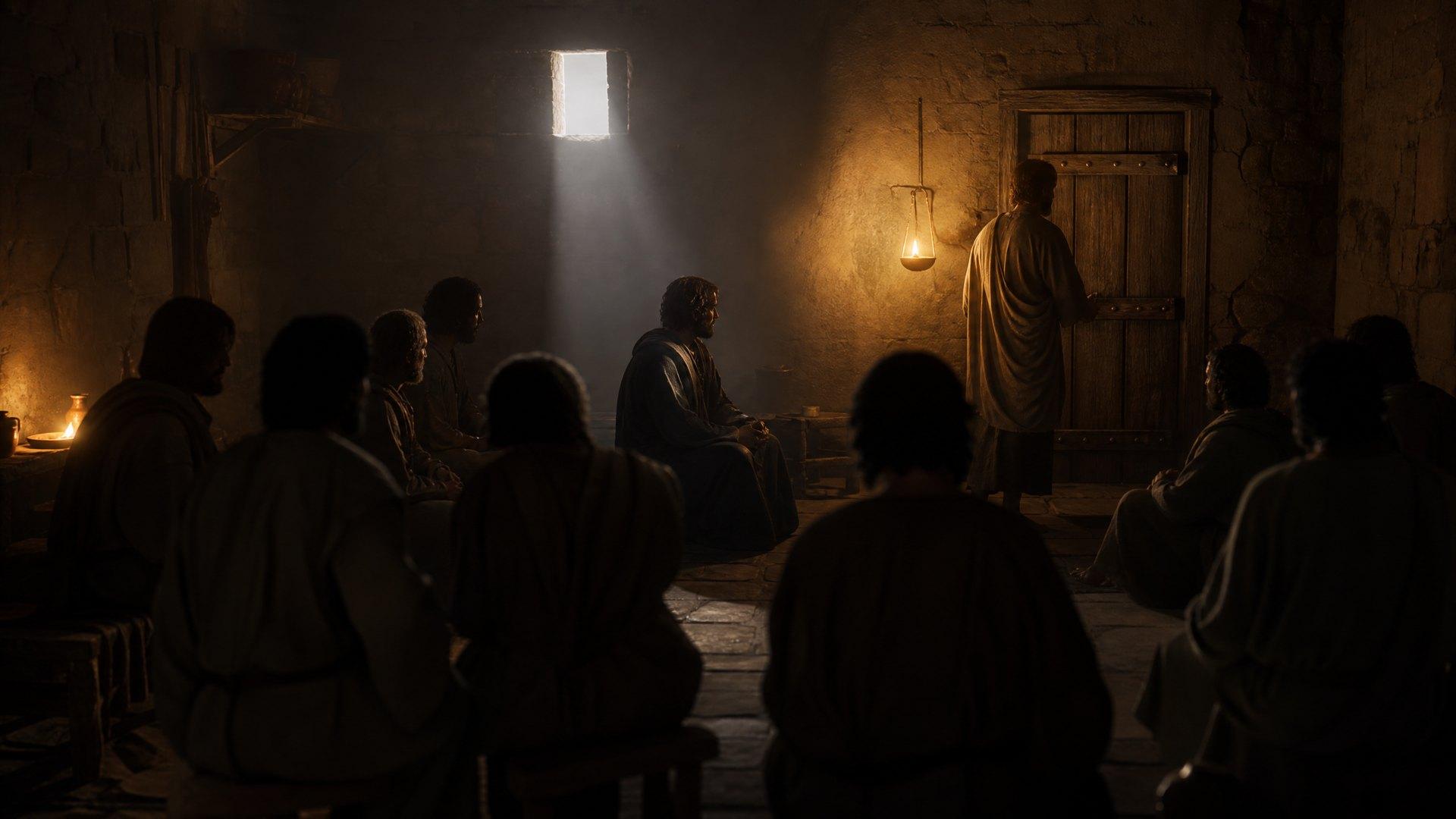
The first Christians did not only speak of the Father and the Son. There was a third. Jesus promised that the Father would send “another Counselor… the Spirit of truth” (John 14:16–17). And new believers went down into the water “in the name of the Father and of the Son and of the Holy Spirit” (Matthew 28:19). From the start, Christians prayed and baptized with three names, and still called themselves people of one God. What they did not have yet was the language to explain it.
One What, three Whos
Start with two different questions. What is it? And who is it?
Take an oil lamp. What is it? A lamp. Who is it? No one. It is a what without a who. Now take yourself. What are you? A human being. Who are you? One person. One what, one who.
God is different. Teachers often sum it up like this: God is one What and three Whos. What is God? One divine being, with one life, one power, and one will. Who is God? The Father, the Son, and the Holy Spirit. Each one is fully God, not a third of him, and they are never apart: where one is at work, all three are at work.
So the Trinity does not make God less personal than you. It makes him more. And nearly every way of getting the Trinity wrong comes from mixing up those two questions.
Four wrong answers
Over the centuries, four wrong answers have kept coming back. Each one sounds simpler, and each one leaves you with a smaller God.
Modalism keeps one What but only one Who. There is just one person in God, who takes turns: first the Father, then the Son, then the Spirit, like one man who works as a fisherman in the morning, a carpenter at noon, and a singer at night. But at the river, the voice from heaven did not come from the man in the water. It spoke to him. And in the garden, Jesus was not praying to himself.
Tritheism keeps the three Whos but gives each one a What of his own: three gods. That would make Christianity look like the Roman world around it, with a few more gods on the shelf. The first Christians had walked away from all that.
Partialism breaks the one What into pieces, like a loaf of bread torn in three, so that each person gets a piece and only together do they make one God. But Jesus said, “He who has seen me has seen the Father” (John 14:9). You cannot say that about a piece of something. The Son is not a third of God. He is fully God.
Arianism is the one that nearly tore the church apart. It says only the Father is truly God. The Son is great, greater than any angel, but God made him, so he had a beginning. It is named after the man who made it famous, Arius.
The Shield of the Trinity
So what is the right answer? About eight hundred years ago, Christians drew it as a simple picture, the Shield of the Trinity. One early copy, from around 1210, is in a manuscript in the British Library.
In the middle is God. On the corners are the Father, the Son, and the Holy Spirit. The inner lines say “is”: the Father is God, the Son is God, the Spirit is God. The outer lines say “is not”: the Father is not the Son, the Son is not the Spirit, the Spirit is not the Father.
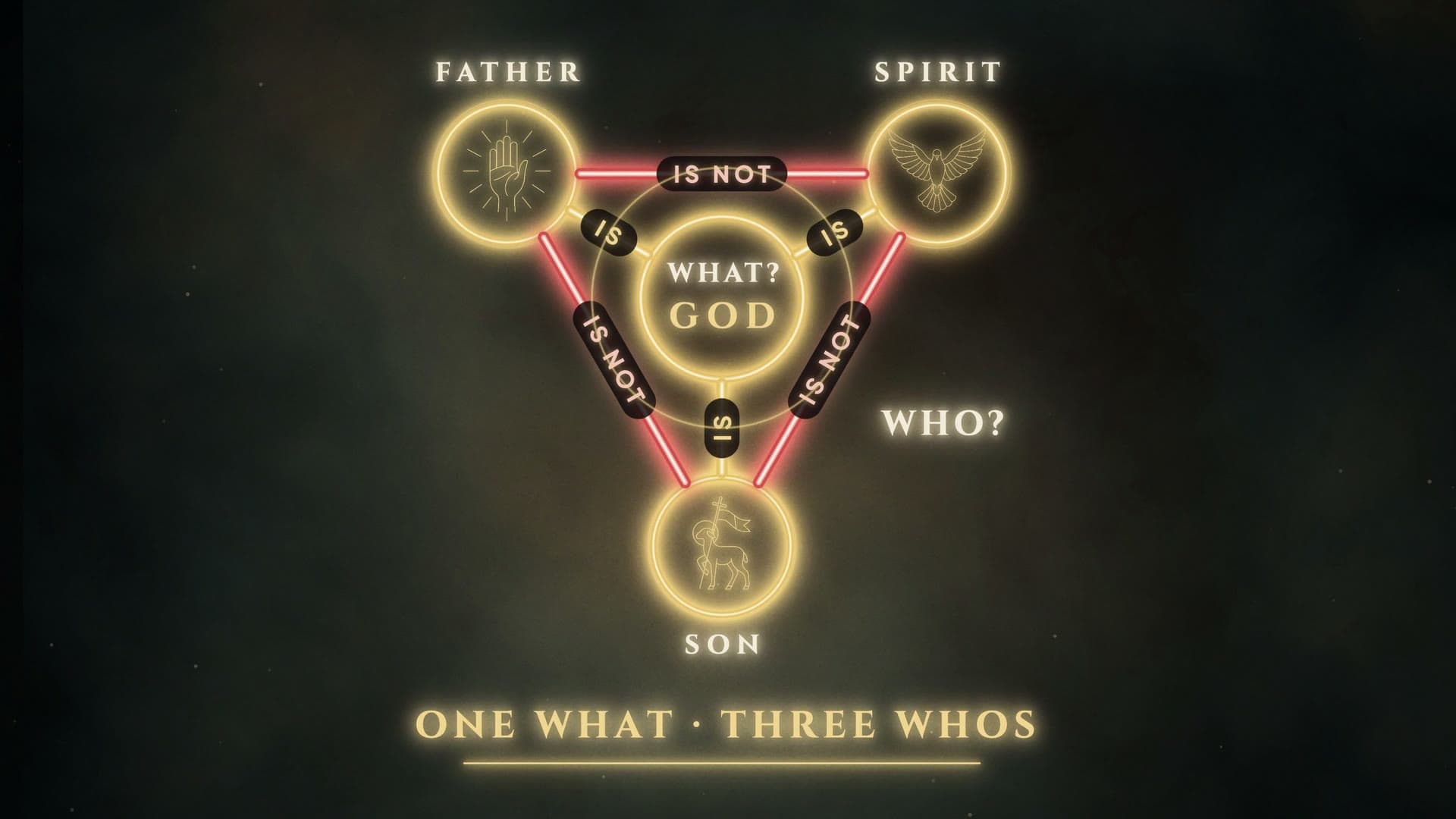
Look again, and you can see the two questions. The inner lines answer “What?”: each one is God. The outer lines answer “Who?”: each one is someone different. One What, three Whos, in one picture.
Begotten, not made
Alexandria, Egypt, around AD 318. A popular priest named Arius looked at the words “Father” and “Son” and drew what seemed like a simple conclusion. A father exists before his son, so there must have been a time before the Son existed. His opponents remembered his slogan as “there was a time when he was not” (the council’s letter).

But a Son who was made would mean Christians had been worshipping something God created. And John’s Gospel had already answered that in its first lines: “In the beginning was the Word, and the Word was with God, and the Word was God… All things were made through him” (John 1:1–3). If all things were made through him, he cannot be one of them.
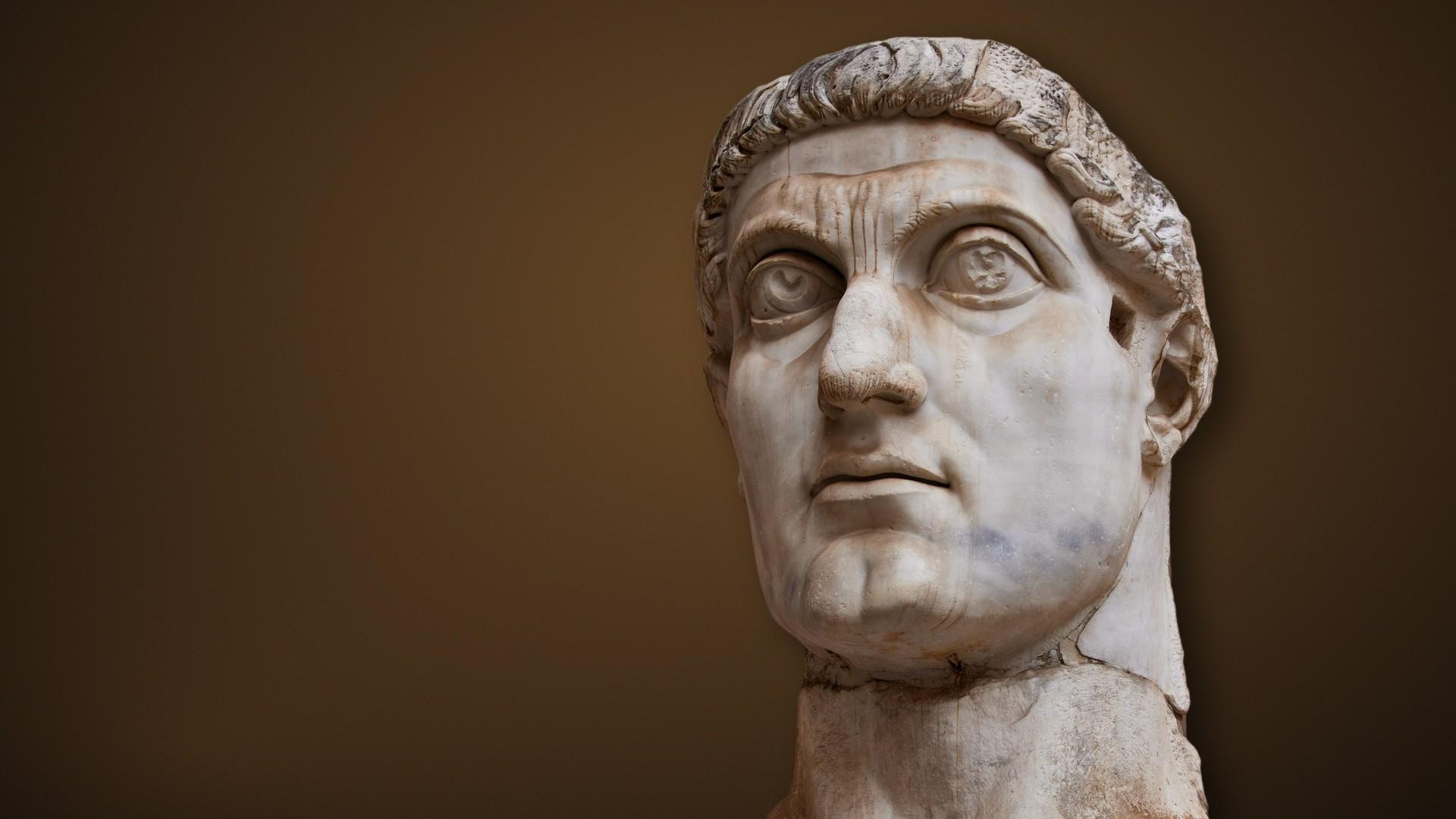
In 325, Emperor Constantine called hundreds of bishops to Nicaea to settle it. They wrote a creed, a short summary of what Christians believe. It calls the Son:
God of God, Light of Light, very God of very God, begotten, not made, being of one substance (homoousion) with the Father.The Creed of Nicaea (325), translated by Henry Percival
Begotten, not made. Much later, C. S. Lewis put the difference simply in Mere Christianity: a man makes a statue, something different from himself, but a man begets a son, someone of his own kind. And what God begets is God.
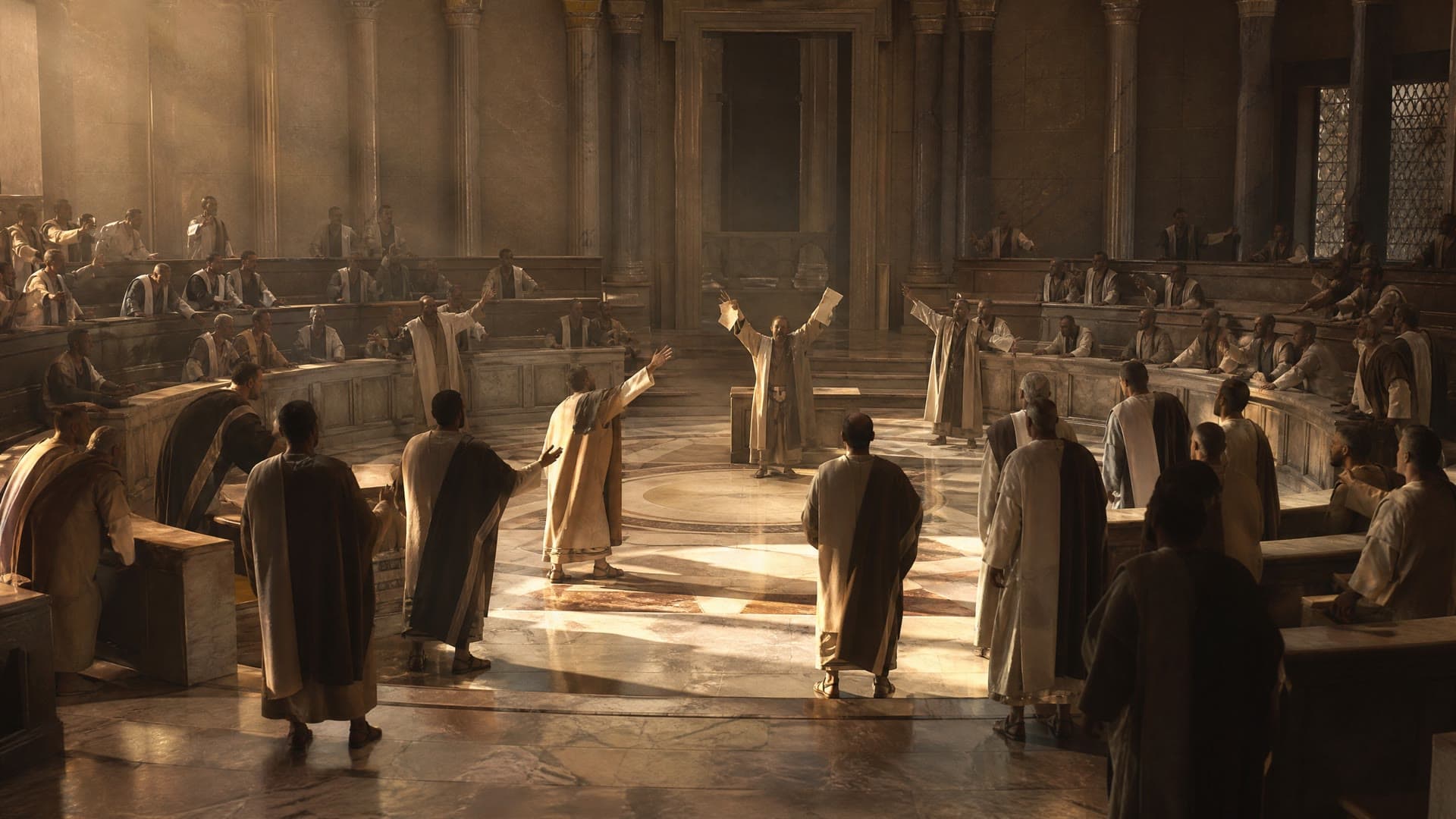
It took fifty more years of arguing before a second council, in 381, finished the creed and said the same about the Holy Spirit, “who with the Father and the Son together is worshipped and glorified” (Schaff, § 129). That is the creed churches still recite today.
Light from Light
So how can one God be three? The first Christians reached for a picture: fire. Justin Martyr, writing in the second century, compared it to a fire that kindles another and “is not lessened,” but “remains the same” (Dialogue with Trypho 61). Light a second torch from the first, and the first flame is not made smaller. That is what the creed means when it calls the Son “Light of Light”: he comes from the Father the way light comes from light, the same light, never less.
But even fire falls short. Every picture we have is borrowed from the world God made, and God is not one more thing inside that world. That is not a failure; it is the point. Centuries before, Isaiah heard God ask:
To whom then will you liken me? Who is my equal?… Lift up your eyes on high, and see who has created these… He calls them all by name.Isaiah 40:25–26, World English Bible
If you could fit God into a picture, he would be smaller than the picture. The Trinity is what it looks like when God is greater than anything we can imagine, and still lets himself be known.
If you see love
Augustine, a great bishop in North Africa, wrote fifteen books about the Trinity, and he kept coming back to one short sentence in the Bible: “God is love” (1 John 4:8). Love, he noticed, always has three: the one who loves, the one who is loved, and the love itself.
You see the Trinity if you see love.Augustine, On the Trinity 8.8.12, in modern English
Augustine went one step further. The Father loves the Son. The Son loves the Father. And the love between them is not just a feeling. It is Someone: the Holy Spirit. So God did not make the world because he was lonely or needed company. He made it the way a full cup spills over: his love was overflowing.
Then the most beautiful part. The word Jesus prayed in the garden, Abba, is given to us. Paul writes that God “sent out the Spirit of his Son into your hearts, crying, ‘Abba, Father!’” (Galatians 4:6). The Son’s own prayer, given to us. The Trinity is not only something to understand. It is a family we are invited into.
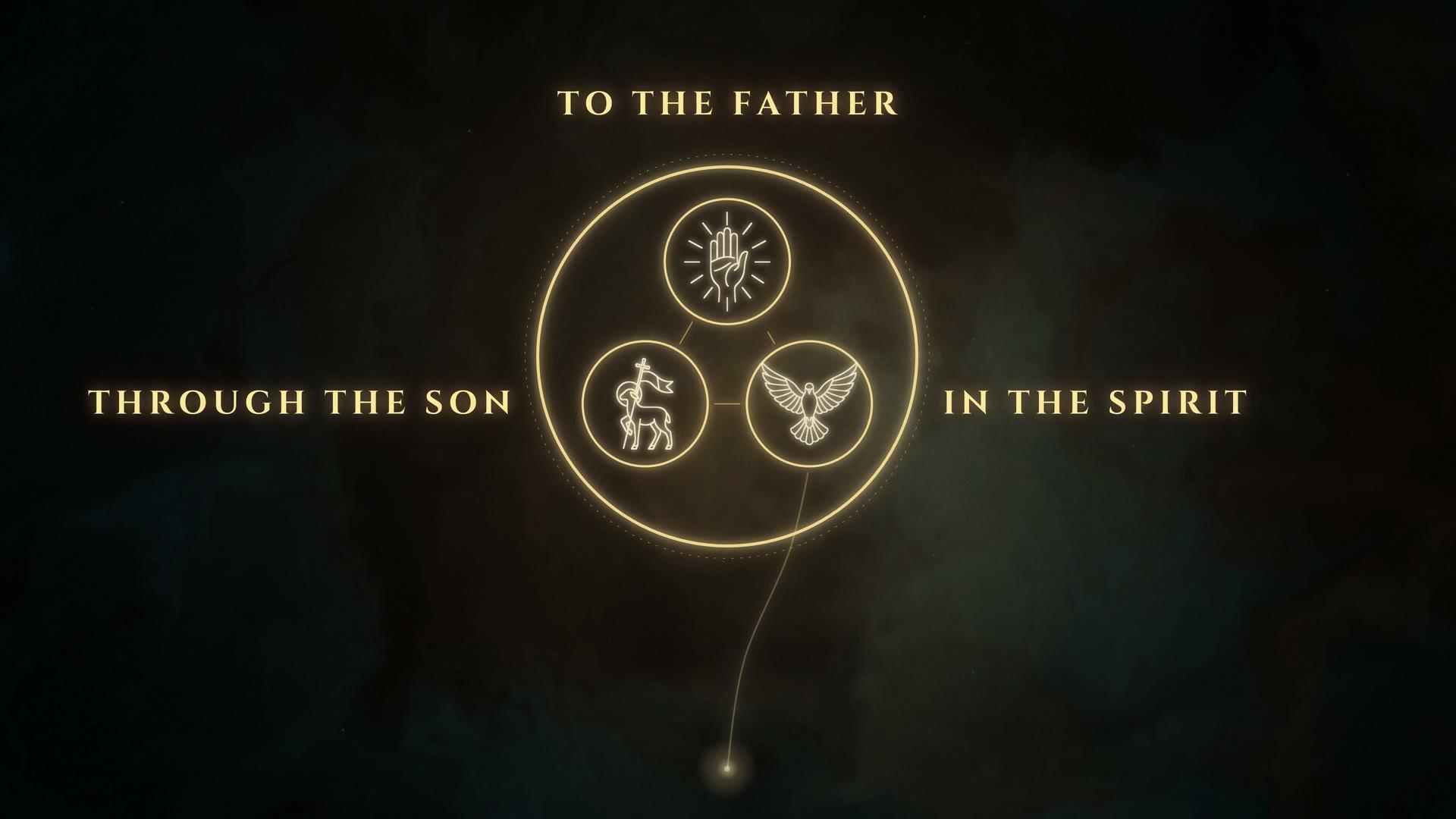
You can even hear it in the way Christians pray. Paul says that through the Son “we both have our access in one Spirit to the Father” (Ephesians 2:18). To the Father, through the Son, in the Spirit. Every time a Christian prays, all three are there.
The boy and the sea
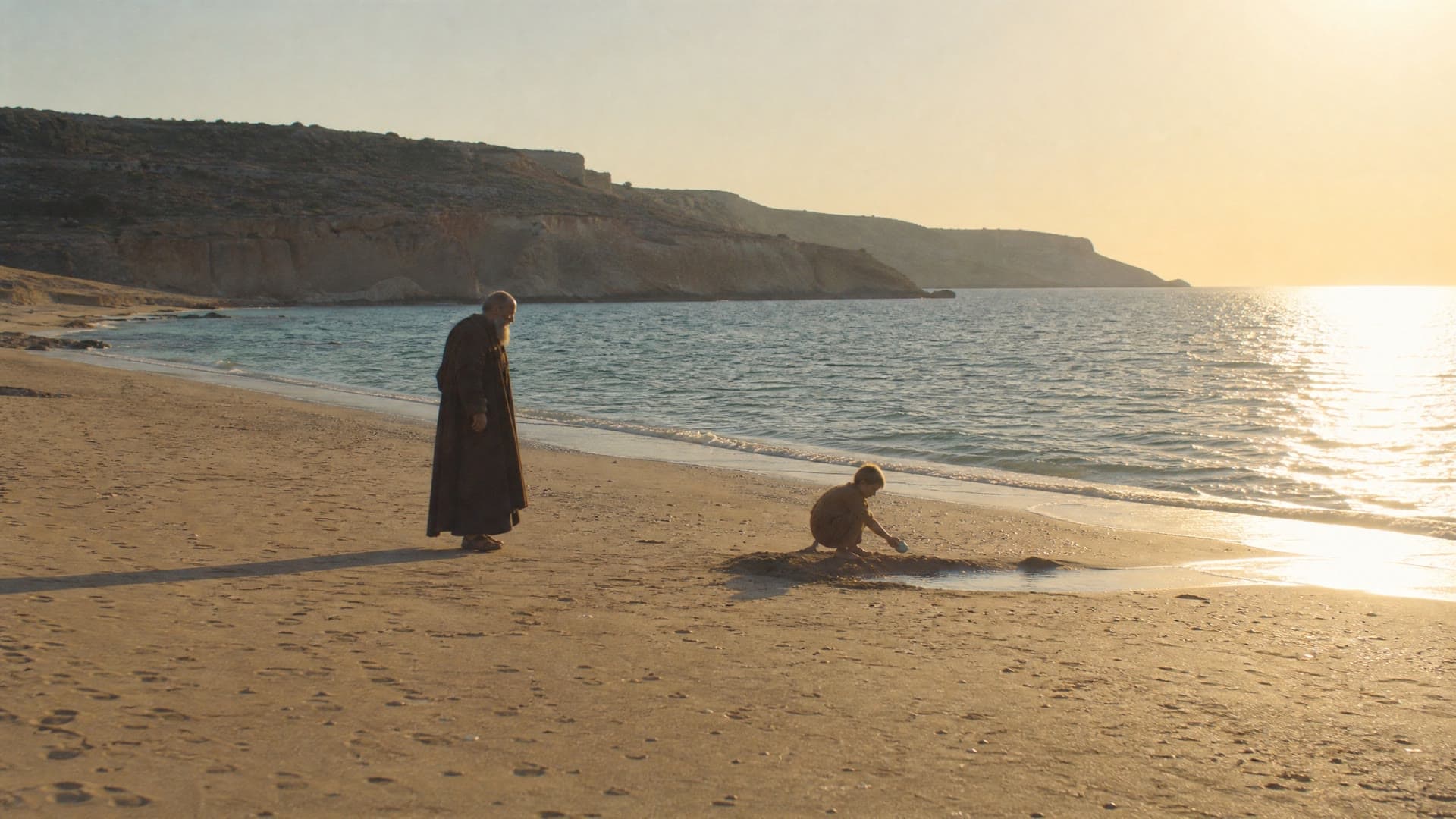
There is an old story about Augustine. One day he was walking by the sea, trying to understand the Trinity, when he saw a little boy carrying water in a shell and pouring it into a small hole in the sand. “What are you doing?” Augustine asked. “I’m putting the sea into this hole.” Augustine smiled: “That’s impossible.” And the boy answered: “No more impossible than fitting the Trinity into your mind.”
No wonder Paul, after trying to explain it, could only end in wonder:
Oh the depth of the riches both of the wisdom and the knowledge of God! How unsearchable are his judgments, and his ways past tracing out!Romans 11:33, World English Bible
Before the universe, before creation, before anyone else existed, the Father loved the Son. We were never meant to fit God into our heads. We are invited into his love.