Nicomedia, 303: the morning they tore the church down
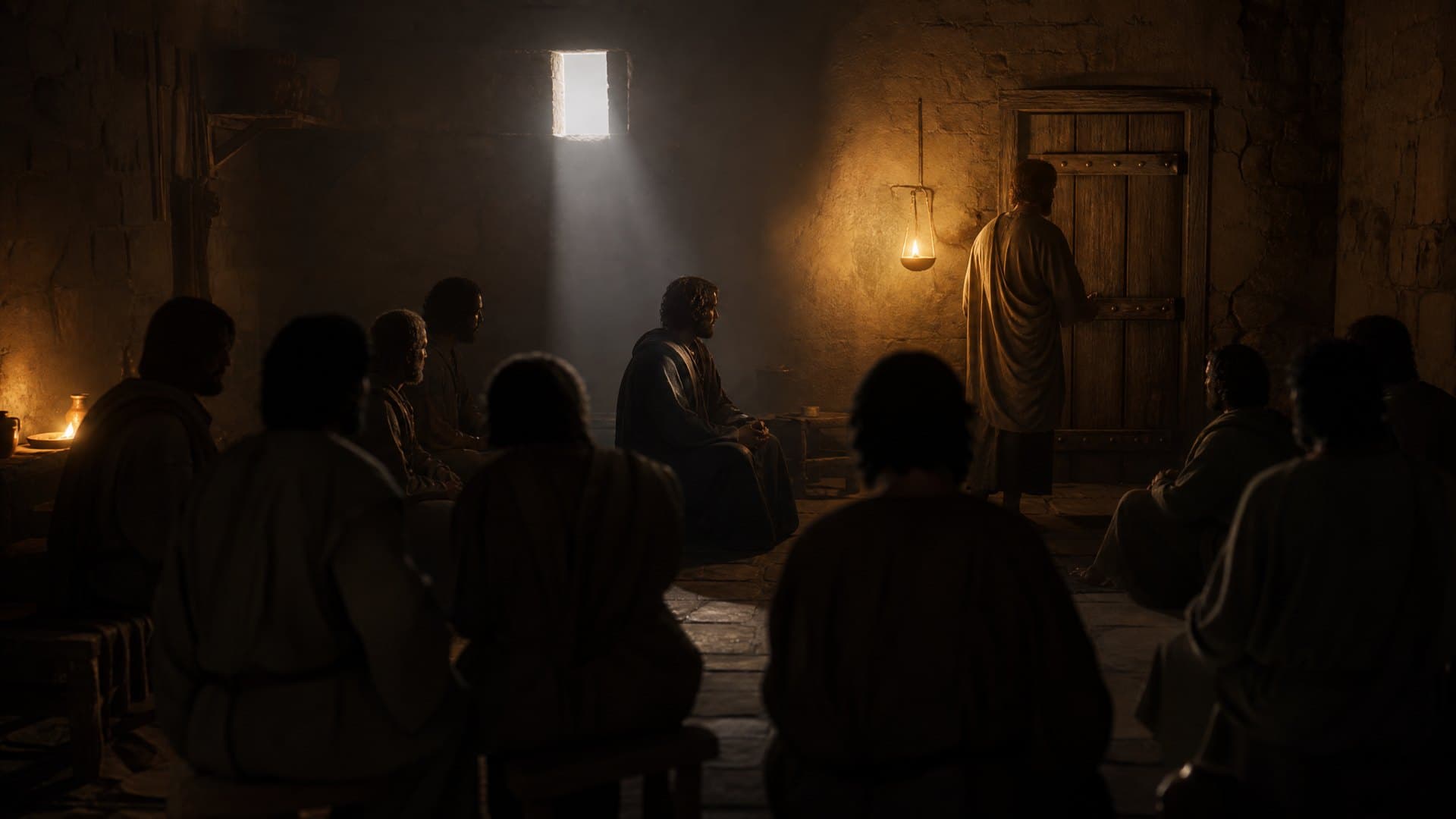
At dawn on February 23, 303, soldiers forced open the doors of the great church in Nicomedia, the emperor’s eastern capital (today İzmit in Turkey). They found the books of the Scriptures and burned them. Then guards with axes levelled the building in a few hours (Lactantius, On the Deaths of the Persecutors 12). It was the first day of the Great Persecution, told in our film on the first Christian martyrs.
At the emperor’s court that winter was a young officer of about thirty. He was not a Christian. He saw it all, and he did nothing; there was nothing he could do (Eusebius, Life of Constantine 2.51).
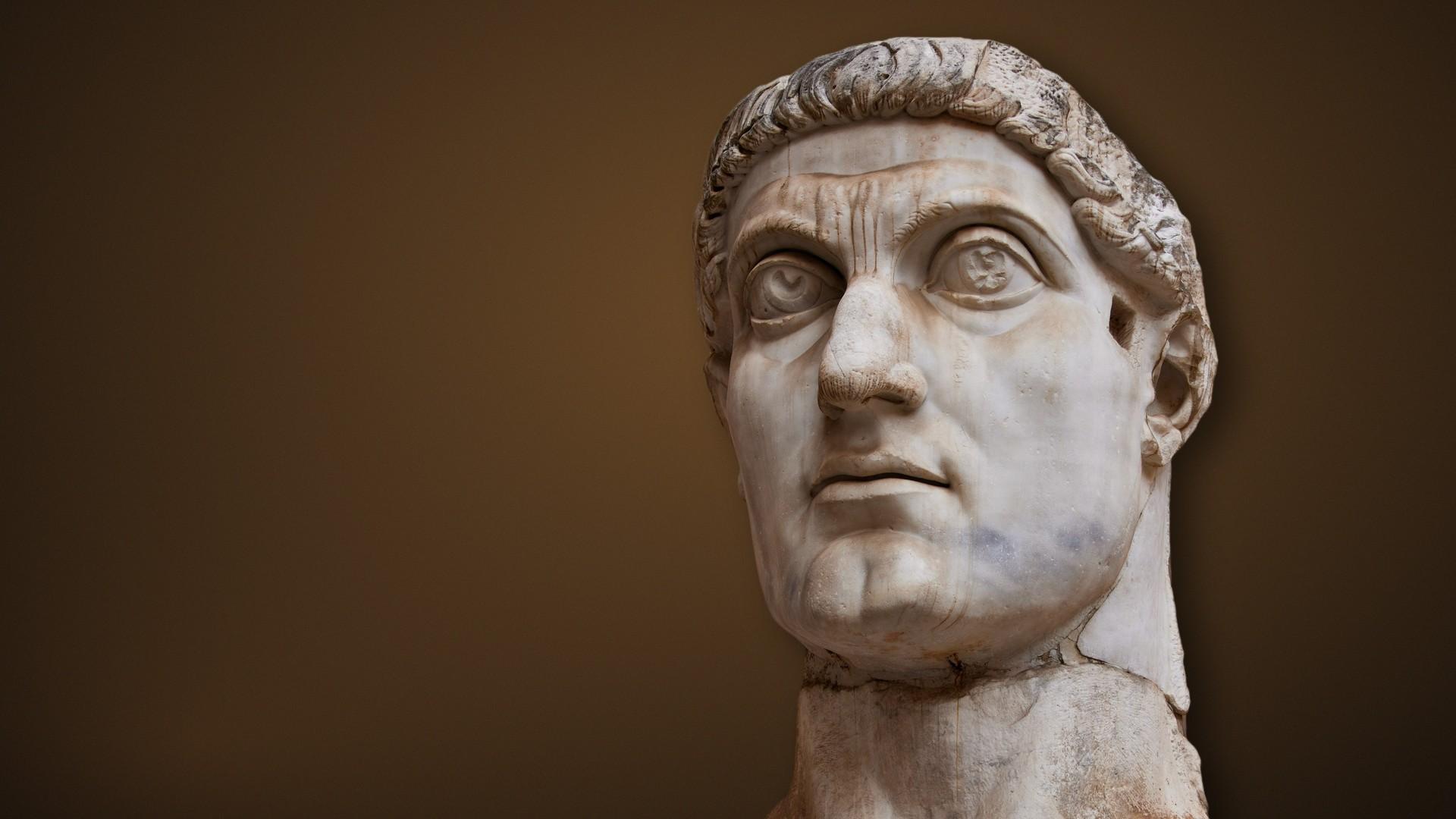
Remember him. Ten years later, an order posted in this same city set every Christian in the empire free, and one of the two names at the top of it was his: Constantine. But was he really one of us? He was a soldier and a ruler, he did some terrible things, and he was baptized only in the last days of his life. To understand him, we start with his mother.
Helena, the mother of Constantine
Helena came from the bottom of Roman society: “a mother of very common origin,” says one early account (Origo Constantini 2). The church later remembered that she had worked at an inn, a small roadside hotel for travellers. Around 272, in Naissus (today Niš in Serbia), she gave a son to Constantius, a rising army officer.
In 293 Constantius was made one of the four rulers who now shared the empire. The price: he had to leave Helena and marry into the family of the senior emperor. He did. Their son was sent east to the court of Diocletian, treated well but in plain words a hostage, to make sure his father obeyed.
So Constantine grew up inside the palace that would start the Great Persecution. When it came, his father, ruling far away in Gaul and Britain, let some church buildings be pulled down. But, says the Christian writer Lactantius:
he preserved entire that true temple of God, which is the human body.Lactantius, On the Deaths of the Persecutors 15, trans. William Fletcher
In his lands, no Christian was killed. Constantine never forgot the difference.
The ride: his escape, and York, 306
In 305 Diocletian stepped down. “Every one looked at Constantine,” writes Lactantius; all were sure he would be named one of the new rulers. Instead Galerius, the new emperor of the East and the man who had pushed hardest for the persecution, “stretching back his hand, put Constantine aside” and pulled another man forward (On the Deaths of the Persecutors 19).
Now Constantine, living in Galerius’s palace, was in danger. One night, after the emperor had gone to bed, he rode away, taking the fresh horses from every station on the road so that no one could follow (Lactantius 24). He crossed the empire, met his father on the coast of Gaul, and sailed with him to Britain. A year later, on July 25, 306, Constantius died at York, and the army put the purple cloak on Constantine and called him emperor (Origo 2.4). He was about thirty-four. In the East, Christians were still dying.
Which God? The march on Rome
By 312 the empire had too many emperors, all getting ready to fight. Constantine marched over the Alps toward Rome, held by a rival, Maxentius. He was outnumbered. Maxentius trusted the old gods. He sacrificed and asked his priests to read the signs.
But which God should Constantine pray to? Eusebius, the bishop of Caesarea who later knew him well, says he “considered, therefore, on what God he might rely” (Life of Constantine 1.27). He had watched emperor after emperor trust in many gods and come to a terrible end. Only his own father had been different: he had honored one supreme God and protected the people who worshiped him. So Constantine prayed to his father’s God, asking him to show who he was and to stretch out his hand to help.
The sign: the cross in the sky
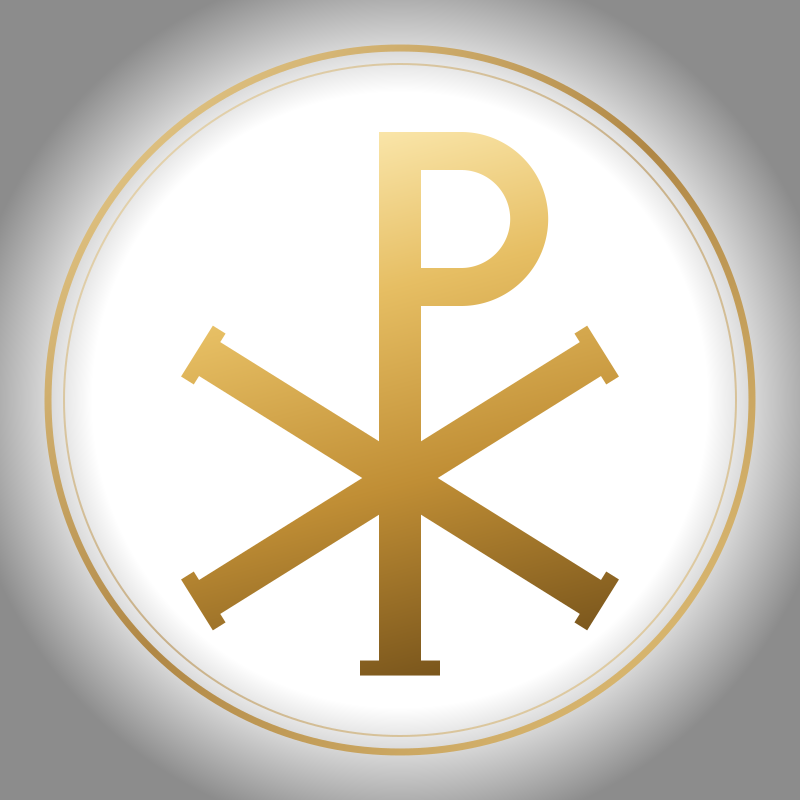
Two accounts survive. Lactantius, tutor to Constantine’s eldest son, wrote a few years later that on the night before the battle Constantine “was directed in a dream to cause the heavenly sign to be delineated on the shields of his soldiers” (On the Deaths of the Persecutors 44). The sign was two Greek letters, one on top of the other: Chi, which looks like our X, and Rho, which looks like our P. They are the first two letters of Christos, Christ.
Eusebius heard it from Constantine himself years later, under oath. It happened on the march, about midday:
he saw with his own eyes the trophy of a cross of light in the heavens, above the sun, and bearing the inscription, Conquer by this.Eusebius, Life of Constantine 1.28, trans. Ernest Cushing Richardson
His whole army saw it. That night Christ came to him in a dream with the same sign, so Constantine had his goldsmiths make a long golden spear with a crossbar, in the shape of a cross, topped by a wreath with Christ’s two letters inside (Life of Constantine 1.29–31). This became his battle flag. For centuries the cross had been Rome’s most shameful way to kill a man. Now a Roman army marched on Rome behind it.
The battle at the Milvian Bridge
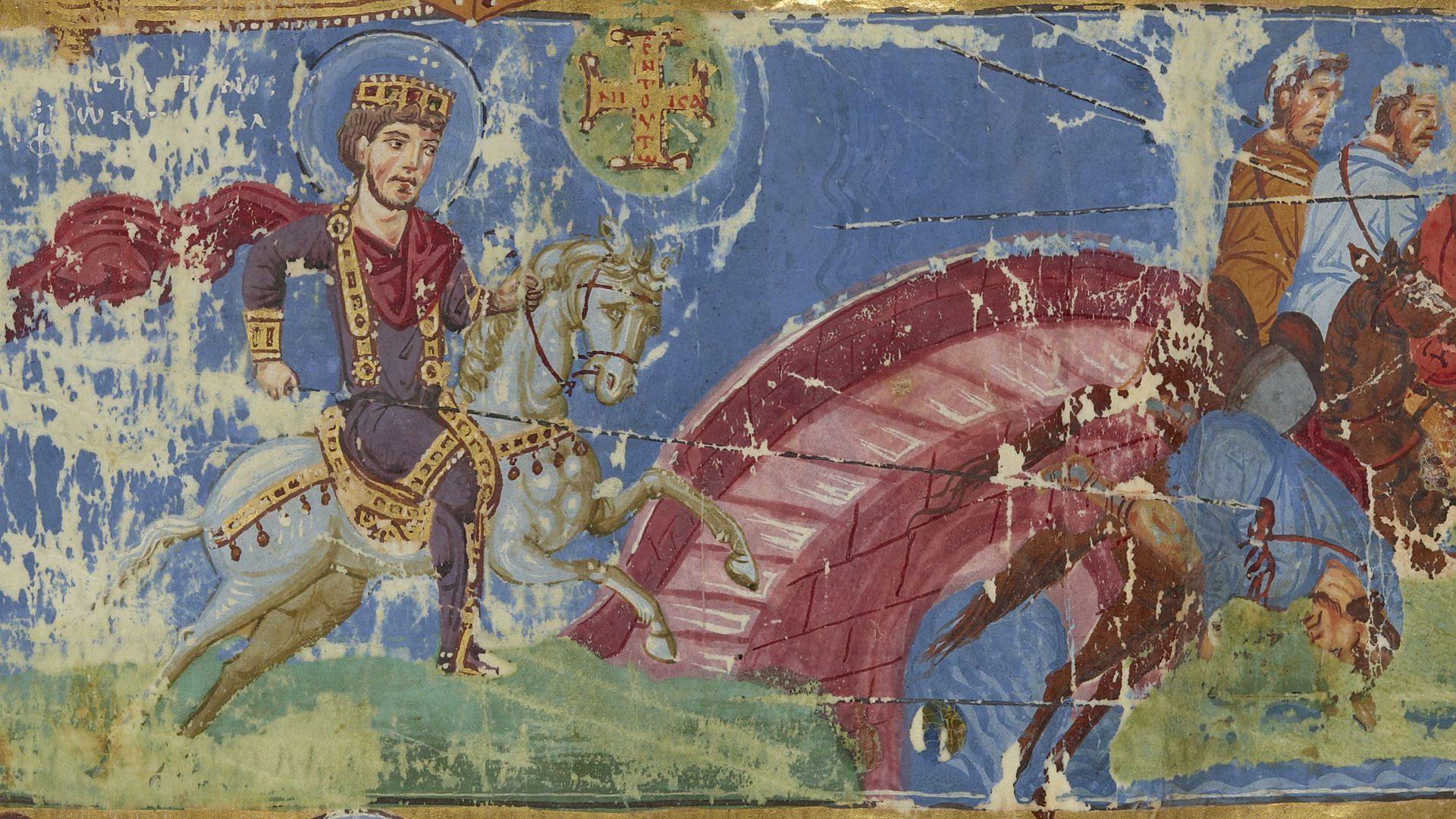
On October 28, 312, Maxentius should have stayed behind Rome’s strong walls. But his priests read the old books of prophecy and announced that “on the same day the enemy of the Romans should perish” (Lactantius 44). Sure that it meant Constantine, he marched out and crossed the river Tiber, beside the stone Milvian Bridge, on a bridge made of boats.
The battle was short. Constantine’s men, the sign of Christ on their shields, broke his line, and Maxentius’s army ran for the river. The bridge of boats gave way, and Maxentius drowned in the Tiber. Christians thought of Pharaoh’s army sinking in the Red Sea (Eusebius, Church History 9.9; Exodus 14).
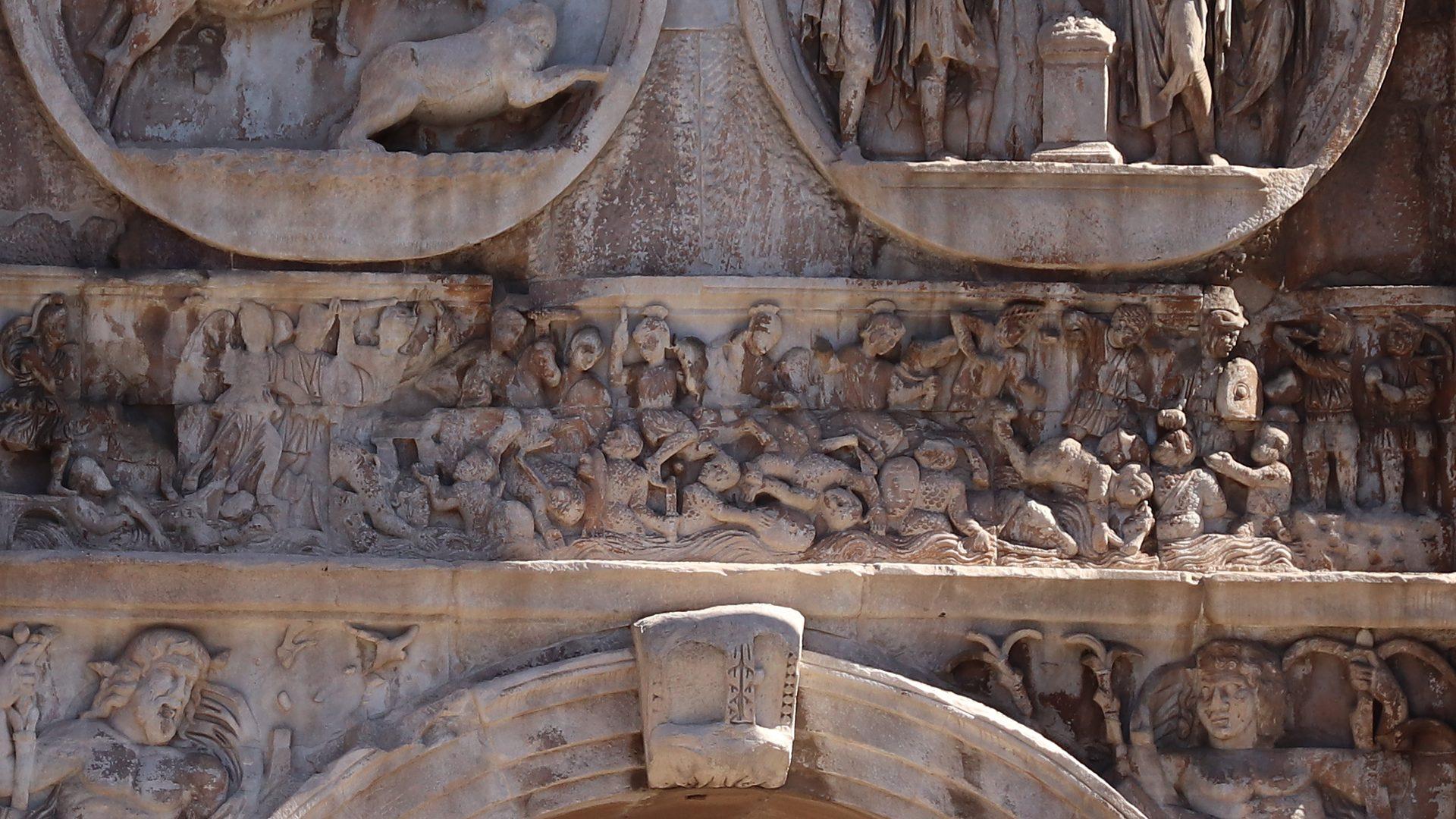
The next day Constantine rode into Rome. The Senate later built him an arch saying he had won “by the inspiration of the Divine,” but the senators still worshiped the old gods and would not say which God. Constantine said it himself: he set up a statue of himself in the busiest part of Rome with a cross in its hand (Life of Constantine 1.40).
Free: the order of Milan, 313
In February 313 Constantine met Licinius, the emperor of the East, in Milan, and they agreed on the order from the beginning of this story. Galerius, dying of a terrible disease, had already ended the persecution in law in 311, with an edict (an official order) (Lactantius 34). Milan went much further:
the Christians and all others should have liberty to follow that mode of religion which to each of them appeared bestLactantius, On the Deaths of the Persecutors 48, trans. William Fletcher
Every church and piece of land taken from Christians was to be given back at once, “without money demanded or price claimed.” We call it the Edict of Milan, but it was really a letter of the two emperors, and Licinius posted it in Nicomedia on June 13, 313 (Eusebius, Church History 10.5). Ten years after that morning, freedom was announced in Nicomedia.
Constantine kept going. In Rome he built the city’s first great churches, one of them over the grave of the apostle Peter. Christians had met on the first day of the week since the apostles, because it was the day Jesus rose (Acts 20:7; Justin Martyr, First Apology 67); in 321 Constantine made it a day of rest for the cities of the empire (Code of Justinian 3.12.2). He banned branding criminals on the face, since the face is made “in the likeness of heavenly beauty” (Theodosian Code 9.40.2). And he ended crucifixion in Roman law (Aurelius Victor 41.4; Sozomen 1.8). The courts of Rome would never again kill a man the way Jesus was killed.
One emperor: the last war with Licinius
Licinius had signed the order of freedom, but in time he came to see the Christians in his half of the empire as Constantine’s friends, and so as his enemies. He threw them out of his palace and army and stopped bishops from meeting. In some cities churches were torn down again, and bishops were put to death (Church History 10.8).
In 324 the two emperors went to war for the last time, and Constantine’s army marched behind the golden flag with the name of Christ. By the autumn, for the first time in almost forty years, the Roman world had one emperor. He wrote at once to the Christians of the East: exiles could come home, prisoners in the mines were freed, stolen property was returned. No one, he wrote, should live in fear under rulers who believed themselves “to be the servants of God” (Life of Constantine 2.30–32).
But the church he had set free was being torn apart from the inside, over who Jesus is.
Nicaea, 325: the bishops with scars
In Alexandria, a priest named Arius taught that the Son of God was not eternal, but the first and greatest thing God ever made. His bishop, Alexander, said no: the Son is God, as the Father is God. Constantine first called the quarrel “truly insignificant” (Life of Constantine 2.68), but the bishops knew better: if Jesus is not truly God, he cannot save us.
In 325 Constantine did something no one had ever done: he called the bishops of the whole church to Nicaea, on the emperor’s own roads and horses, the roads that had once carried the orders for their arrest. Eusebius, who was there, counted more than 250 bishops; the church would remember 318 (Life of Constantine 3.6–8).
Many bore the marks of persecution: one bishop’s hands had been burned useless with a red-hot iron, and others had lost the right eye. “The Council looked like an assembled army of martyrs,” wrote the historian Theodoret (Ecclesiastical History 1.6). And the church remembered that the emperor kissed the scars of those whose eyes had been cut out for their faith (Socrates, Church History 1.11; Theodoret 1.10).
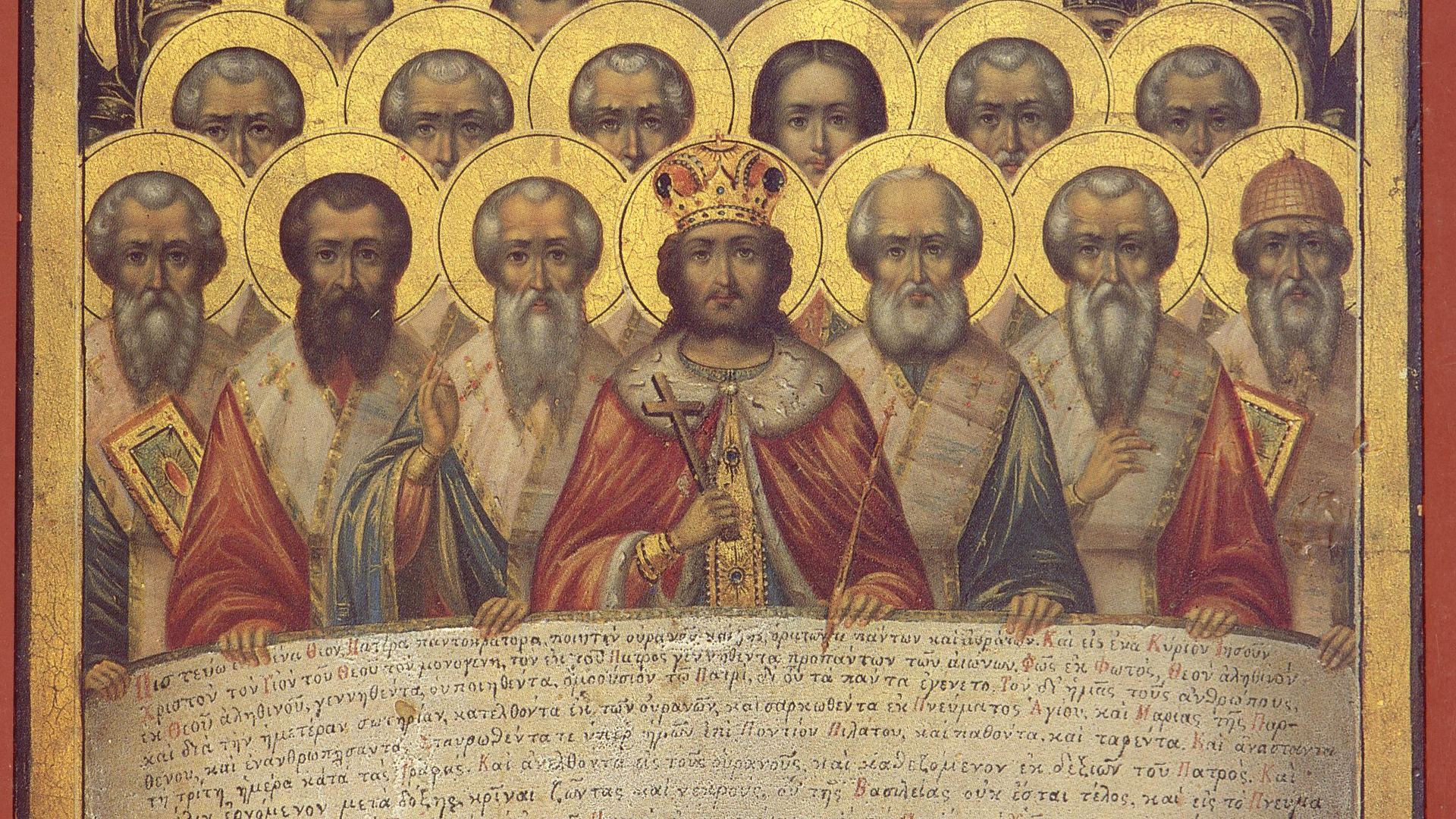
The council wrote down what Christians had believed from the beginning. Its creed, a short statement of belief, says that Jesus Christ is “very God of very God, begotten, not made, being of one substance with the Father” (the Creed of Nicaea): as fully God as the Father is. Only two bishops refused to sign. In a slightly longer form from 381, these words are still said in churches every Sunday (see our film on the Trinity). And no, the council did not choose the books of the Bible; nothing written at the time says so.
Afterward, men once hunted by soldiers walked past guards with drawn swords to dine at the emperor’s table:
One might have thought that a picture of Christ’s kingdom was thus shadowed forth, and a dream rather than reality.Eusebius, Life of Constantine 3.15, trans. Ernest Cushing Richardson
The tomb of Jesus found in Jerusalem
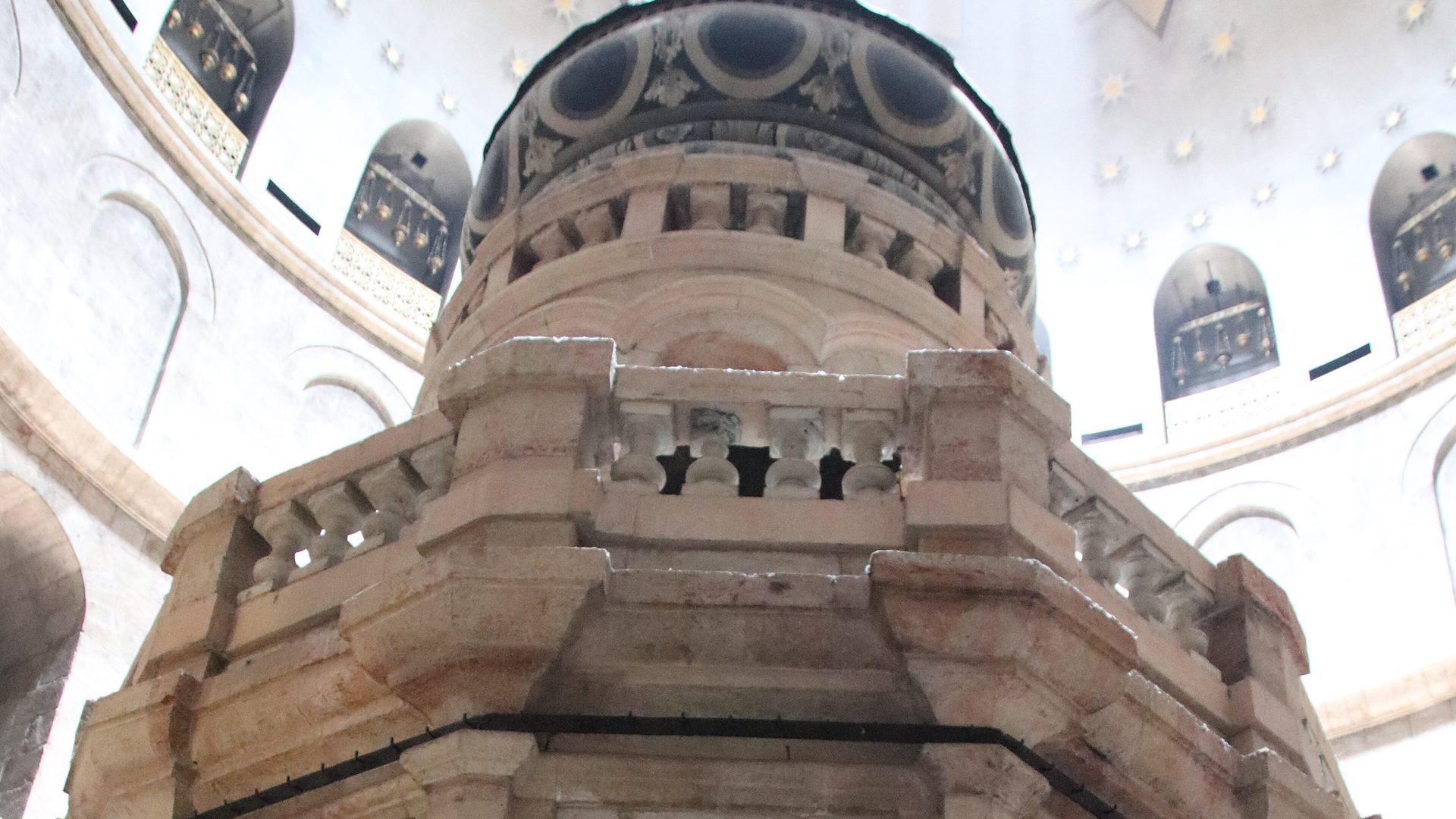
For almost two hundred years, the place where Jesus died and rose had been buried. Around 135 the emperor Hadrian covered it with earth and built a temple to the goddess Venus on top (Life of Constantine 3.26; Jerome, Letter 58.3). Constantine ordered it all pulled down: the temple, the stones, even the soil. As the workers dug, they found what no one expected to see again: a tomb cut in the rock. To Eusebius, the cave was a picture of the Savior’s return to life: “after lying buried in darkness, it again emerged to light” (Life of Constantine 3.28). Over it Constantine built the Church of the Holy Sepulchre, dedicated in 335.
His mother, now a Christian and nearly eighty, traveled to the Holy Land. She built churches over the cave in Bethlehem where Jesus was born and on the Mount of Olives, set prisoners free, and stood in the crowd in plain clothes to pray (Life of Constantine 3.42–47). The church remembers one thing more: that she found the wood of the cross itself. Around 350, Cyril of Jerusalem said that “the whole world has since been filled with pieces of the wood of the Cross” (Catechetical Lectures 4.10).
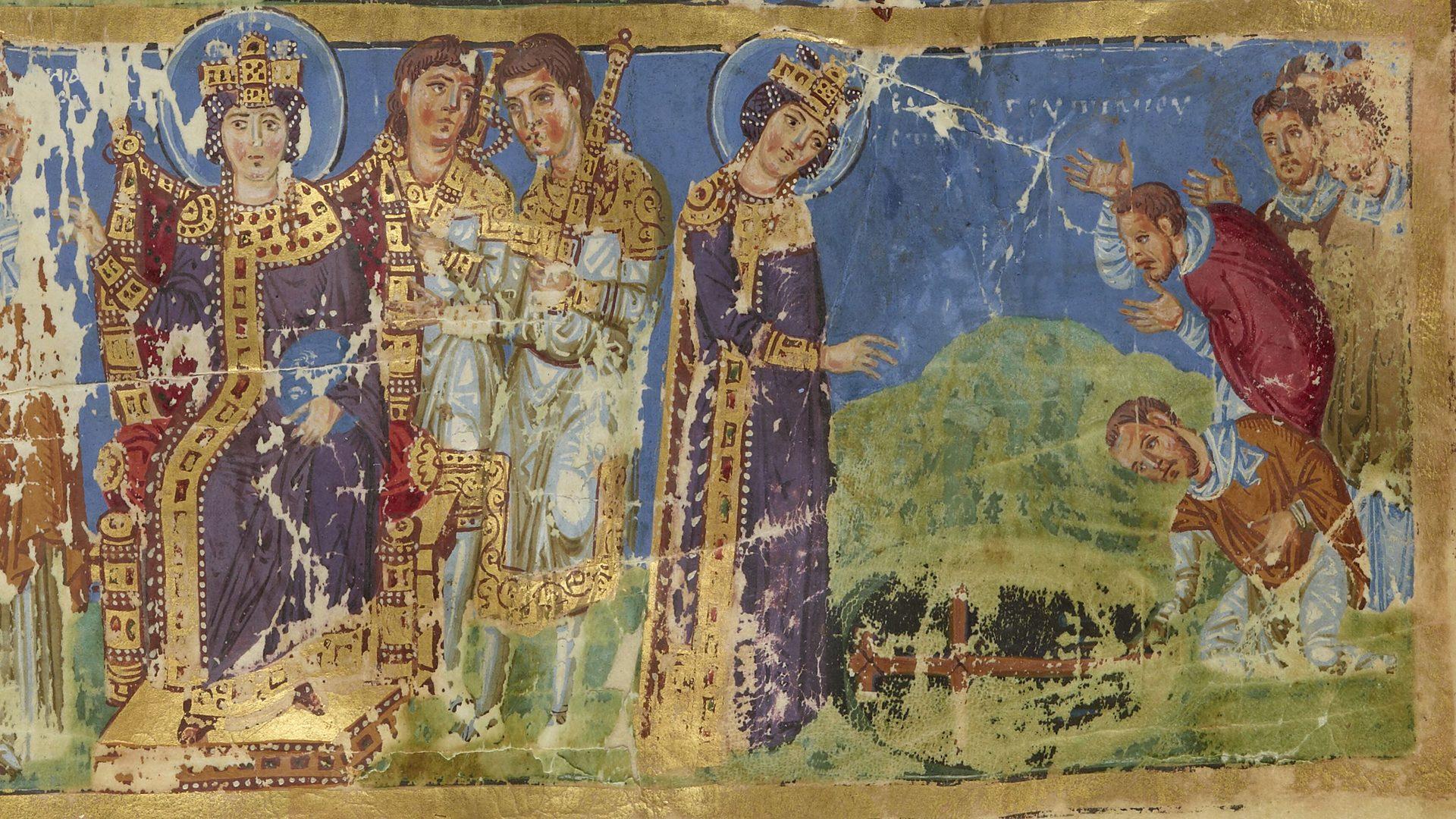
Helena died soon after, with her son holding her hands. But by then something had happened in his family that he could never undo.
The shadow: his son’s death and fifty Bibles
In 326 Constantine had his eldest son, Crispus, a brave commander whom many loved, put to death. Soon after, his wife Fausta was put to death too. We do not know why; the writers who knew him say nothing (Eutropius 10.6). The first Christian emperor was not a perfect man.
His enemies later said he turned to Christ only to wash away this guilt (Zosimus 2.29). That cannot be true: by then he had carried the sign of Christ for fourteen years (Sozomen, Ecclesiastical History 1.5).
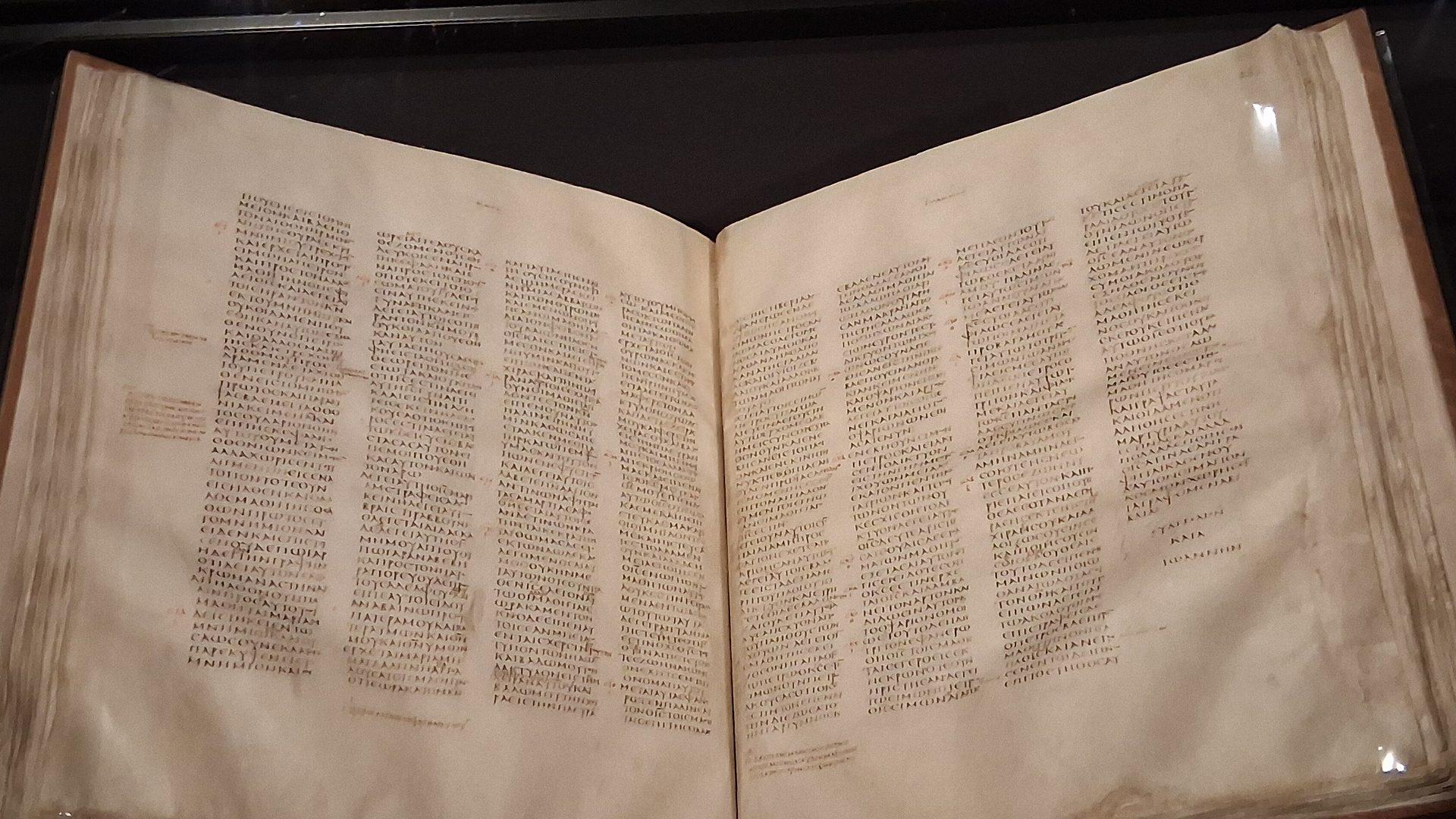
In those same years he built a new capital on the sea between Europe and Asia, Constantinople, and filled it with churches. Then he ordered his biographer Eusebius to have “fifty copies of the sacred Scriptures” made “in a legible manner” (Life of Constantine 4.36). In Nicomedia an emperor had burned those books. Now an emperor was paying to copy them.
Yet he still had not been baptized. Many people then waited until late in life, to be washed clean once and never fall again. Constantine hoped to be baptized in the river Jordan, where Jesus was. He never got there.
The white robe: his baptism and death, 337
In the spring of 337 Constantine, about sixty-five, fell ill and knew it was the end. Near Nicomedia, where he had once watched the church torn down, he called the bishops and told them:
I had thought to do this in the waters of the river Jordan, wherein our Saviour, for our example, is recorded to have been baptized: but God, who knows what is expedient for us, is pleased that I should receive this blessing here.Eusebius, Life of Constantine 4.62, trans. Ernest Cushing Richardson
He took off the purple robe of an emperor and was baptized by the bishop of Nicomedia, another Eusebius (Jerome, Chronicle). They dressed him in white, the clothes of a new Christian, and he never put on the purple again. “Now I know that I am truly blessed,” he said (Life of Constantine 4.62–63).
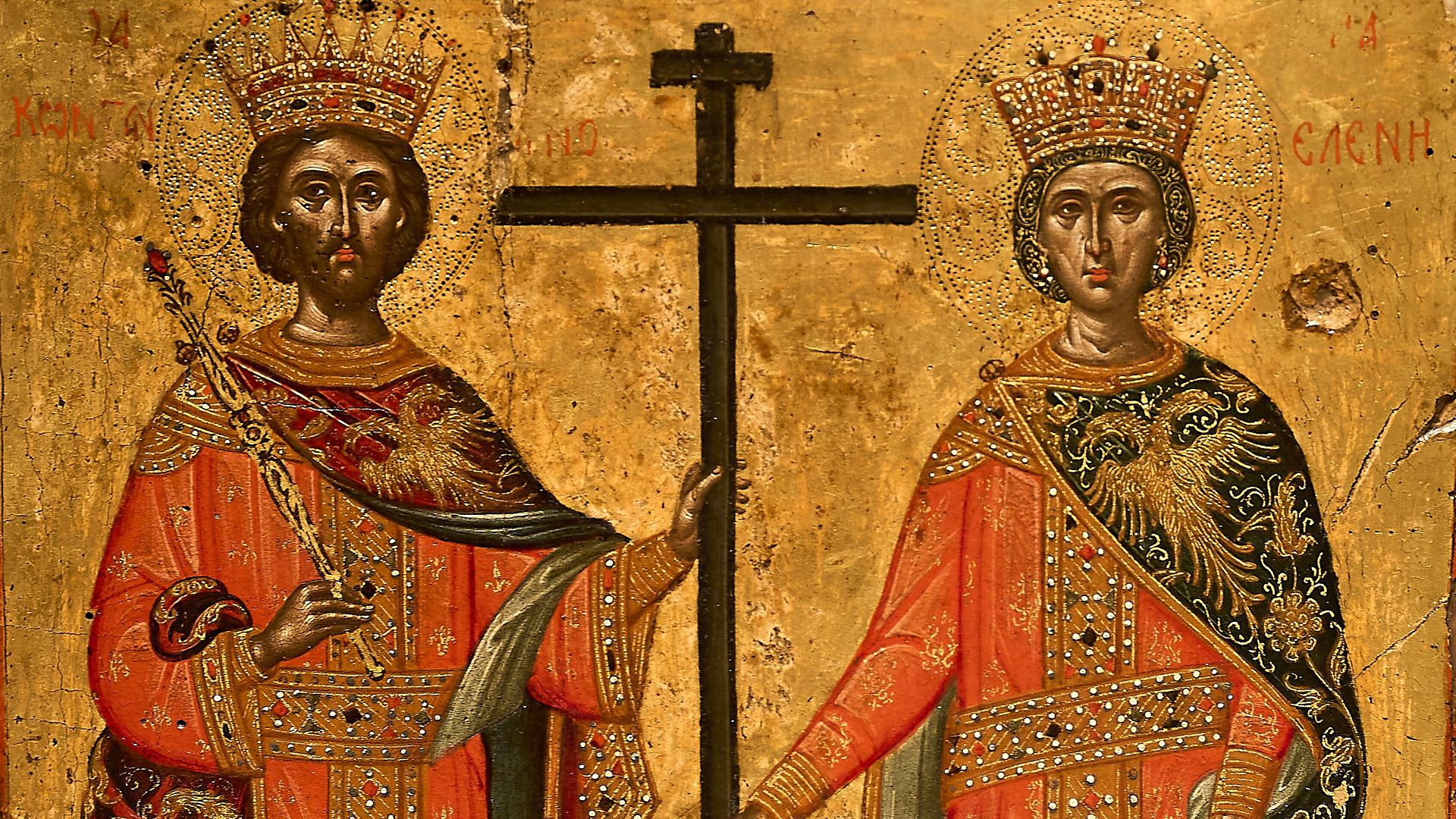
He died at midday on the feast of Pentecost, May 22, 337, and was buried in Constantinople in the Church of the Holy Apostles, his tomb in the middle of twelve memorials to the apostles. To this day the Orthodox Church honors him and his mother together as saints, and calls him “equal to the apostles.”
What Constantine really changed
He did not make Christianity the religion of the empire. That came in 380 under Theodosius, more than forty years after his death (Theodosian Code 16.1.2). He did not choose the books of the Bible, invent Sunday, or make Jesus God. Christians had worshiped Jesus as God for three hundred years, and had died for it.
The church had grown for almost three centuries with no emperor to help it and many against it; when Constantine came to power, about one person in ten was a Christian, by modern estimates. The martyrs had already won. Constantine was the first emperor to see it.
But he stopped the killing. He gave back what was stolen and set the prisoners free. He gathered the bishops and built over the tomb of Christ. The young officer who watched a church torn down in Nicomedia spent the rest of his life building them.
The cross was the way Rome killed the people it wanted to shame. It ended up on the emperor’s battle flag and was struck out of Rome’s law. Rome did not defeat the cross. The cross is still here. The Roman Empire is not.