
Sacrifice or die
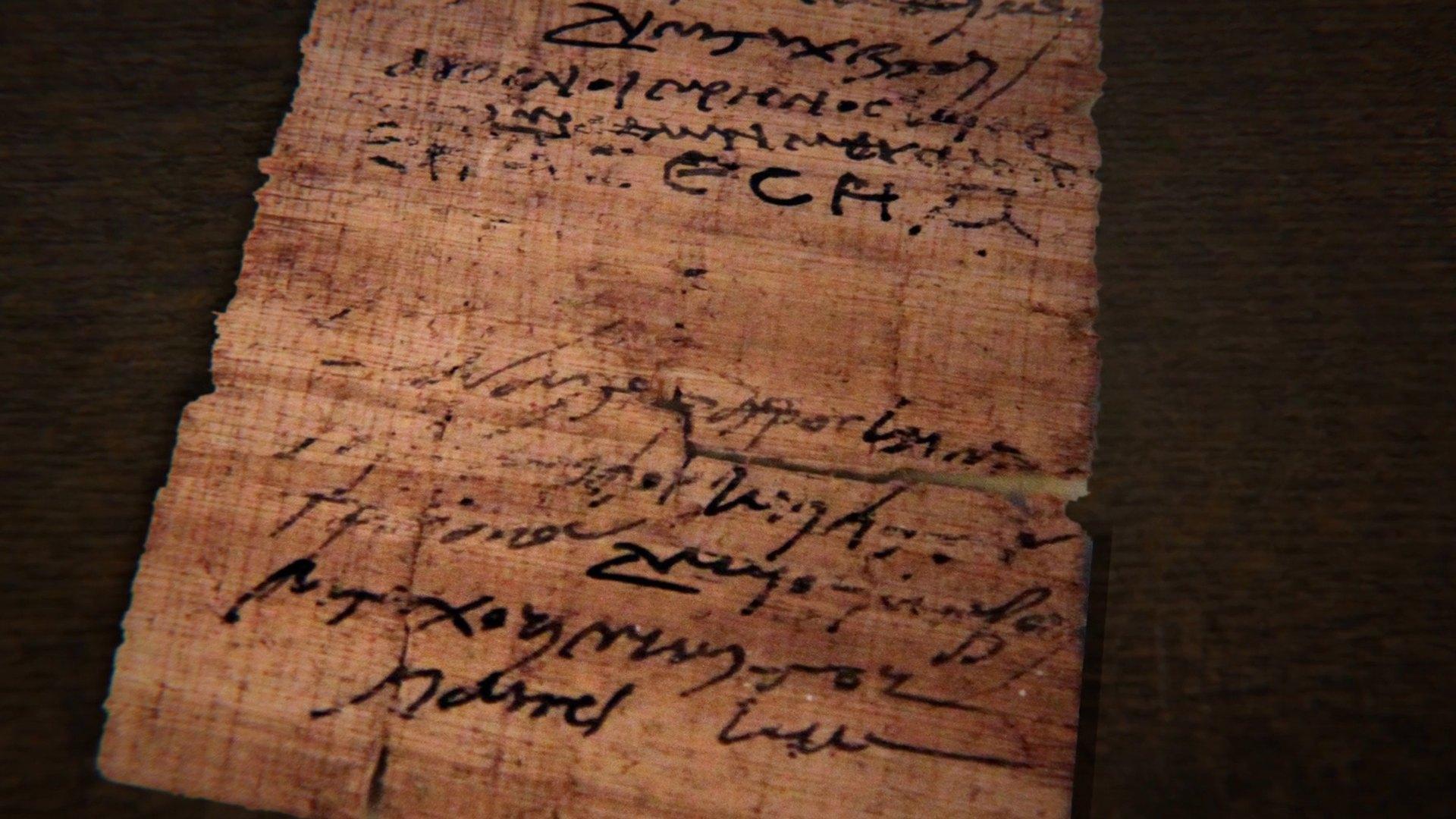
In the year 250, an order went out to every person in the Roman Empire: go to the temple, offer a sacrifice to the gods of Rome, and get a certificate to prove it. Men, women, even children.
Some of those certificates still exist. They were written on papyrus in Egypt, signed by local officials, and preserved for more than sixteen hundred years in the dry sand. The one shown in the film says that its owner had always sacrificed to the gods, and had now done it again, in front of witnesses. For him it was easy.
For a Christian standing in the same line, it was not easy at all. One pinch of incense on the altar, and you went home to your family. Refuse, and you could lose everything. Many Christians gave in. But many did not, and for almost three hundred years ordinary believers lived one accusation away from death. This is their story, and the story of why Rome, with all its armies, could not stop them.
The first stone: Stephen
It began in Jerusalem, around the year 34. Stephen was one of seven men chosen to serve the young church, making sure that poor widows received their daily food (Acts 6). When he was brought before the council for preaching about Jesus, he did not back down. He looked up and said that he saw heaven open, and Jesus standing at God’s right hand. His listeners covered their ears, rushed at him, dragged him out of the city, and stoned him (Acts 7).
As he fell to his knees, his last words were a prayer for the men killing him:
Lord, don’t hold this sin against them!Acts 7:60, World English Bible
Stephen is remembered as the first Christian martyr. The word martyr comes from the Greek for “witness.”
The men throwing the stones had laid their cloaks at the feet of a young man named Saul, who approved of the killing. After that day he went from house to house, dragging Christian men and women off to prison (Acts 8:1–3). Then, on the road to Damascus, his life turned around (Acts 9). The hunter became the hunted. Paul later listed what it cost him: whippings, beatings with rods, prison, and a stoning that left him for dead (2 Corinthians 11:23–27; Acts 14:19).
Why Rome hated the Christians
Rome was not against religion. It welcomed new gods, as long as people also honored the gods of Rome, who were believed to keep the empire safe. Burning a little incense before them, or before the emperor’s statue, was a public sign of loyalty.
Christians would not do it. For them there was one God and one Lord, Jesus. So their neighbors called them atheists. Because they met before dawn and spoke of eating Christ’s body and drinking his blood, rumors spread that they ate human flesh. The truth was the opposite: in a world where unwanted babies were often left outside to die, Christians refused to abandon them, and they cared for orphans and widows no one else wanted.
When disaster came, they were an easy target. Tertullian, writing around AD 197, describes the cry that went up whenever the river flooded or the rain failed: “Away with the Christians to the lion!” (Apology 40).
Nero’s gardens
In the summer of 64, a great fire swept through Rome. When people whispered that the emperor Nero had started it, he blamed the Christians. The Roman historian Tacitus, who had no sympathy for Christians, recorded what followed: some were dressed in animal skins and torn apart by dogs, some were crucified, and some were set on fire to light the emperor’s gardens at night. Even Romans who despised them began to pity them, Tacitus says, feeling they were dying not for the public good but for one man’s cruelty (Annals 15.44).
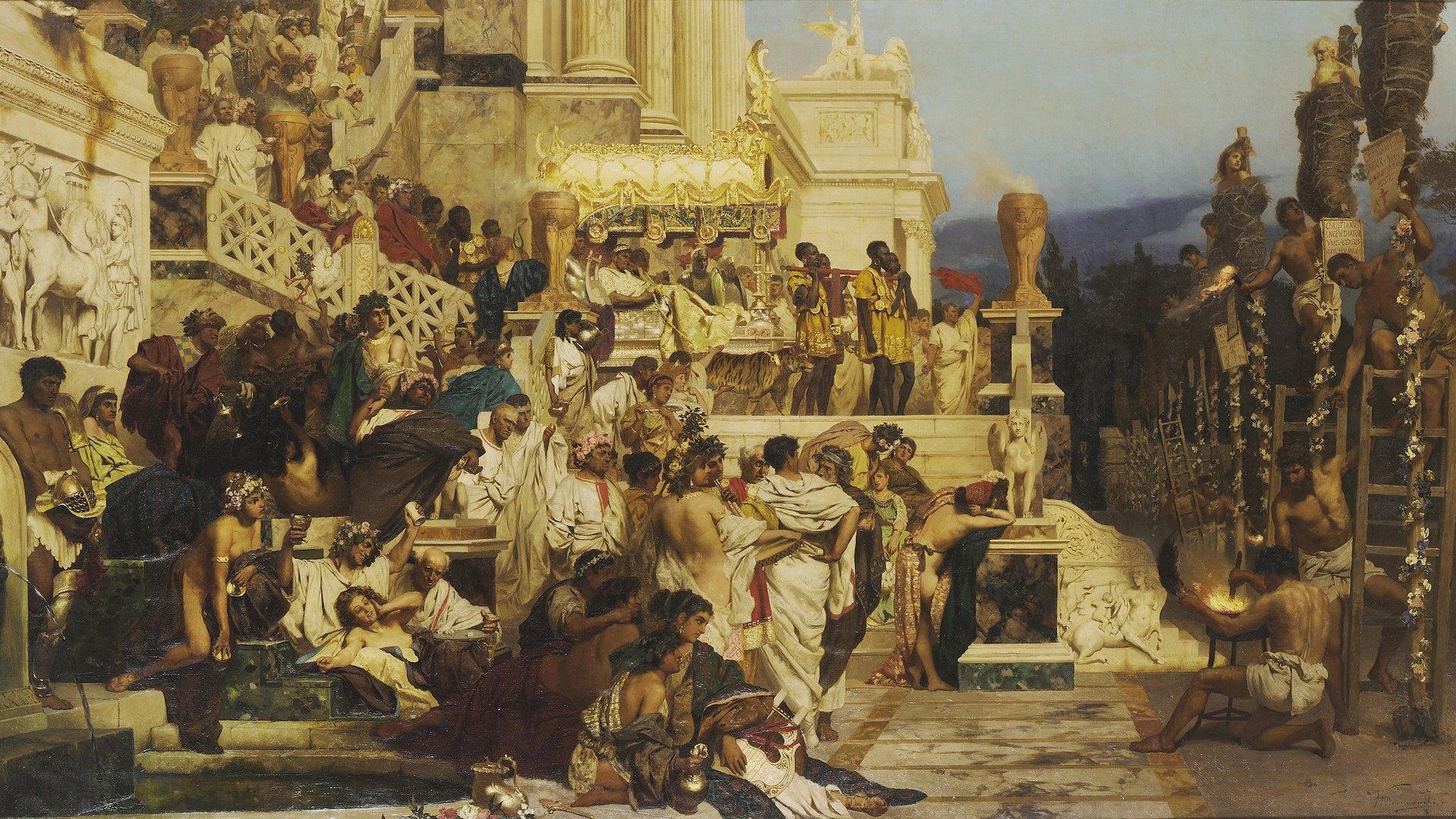
The church remembered that both Peter and Paul died in Rome in these years. Paul, a Roman citizen, was beheaded. Peter was crucified, and, according to early tradition, asked to be crucified head downward because he did not feel worthy to die exactly like his Lord (Eusebius, Church History 2.25 and 3.1).
What happened to the twelve apostles
The apostles had once run away on the night Jesus was arrested. Peter had sworn three times that he did not know him. Yet after they said they had seen Jesus alive again, they faced whips and prison with joy (Acts 5:40–41).
The early church kept a memory of where each one went and how he died. Andrew was crucified in Greece. James, the brother of John, was the first apostle killed, by the sword in Jerusalem (Acts 12:2). Philip died in Hierapolis, in modern Turkey. Bartholomew died in Armenia, and Thomas, “the one who doubted,” reached India and died there by spears. Simon and Jude were remembered as killed together in Persia. John was exiled to the island of Patmos, outlived the others, and died of old age in Ephesus.
The rules of the hunt
Around 112, Pliny the Younger, the Roman governor of Bithynia, wrote to the emperor Trajan with a simple question: what should he do with Christians? He had tortured two slave women who served as deaconesses and found no crimes, only people who met before dawn, recited a hymn “to Christ, as though he were a god,” and promised not to steal, cheat, or lie. He had already executed some of them for their stubbornness.
Trajan’s answer set the rule for more than a century: do not hunt for Christians, but if someone is accused and admits it, punish them unless they sacrifice (Pliny, Letters 10.96–97). The crime was the name itself.
One of the first to face this rule was Ignatius, bishop of Antioch, taken to Rome in chains around 110 under ten soldiers he called “ten leopards.” Passing through Smyrna, he met its younger bishop, Polycarp, and later wrote to him: “Stand firm, as does an anvil which is beaten” (To Polycarp 3). To the Christians in Rome he wrote, begging them not to save him:
I am the wheat of God, and let me be ground by the teeth of the wild beasts, that I may be found the pure bread of Christ.Ignatius of Antioch, Letter to the Romans 4, trans. Roberts and Donaldson
Smyrna, 155: Polycarp in the fire
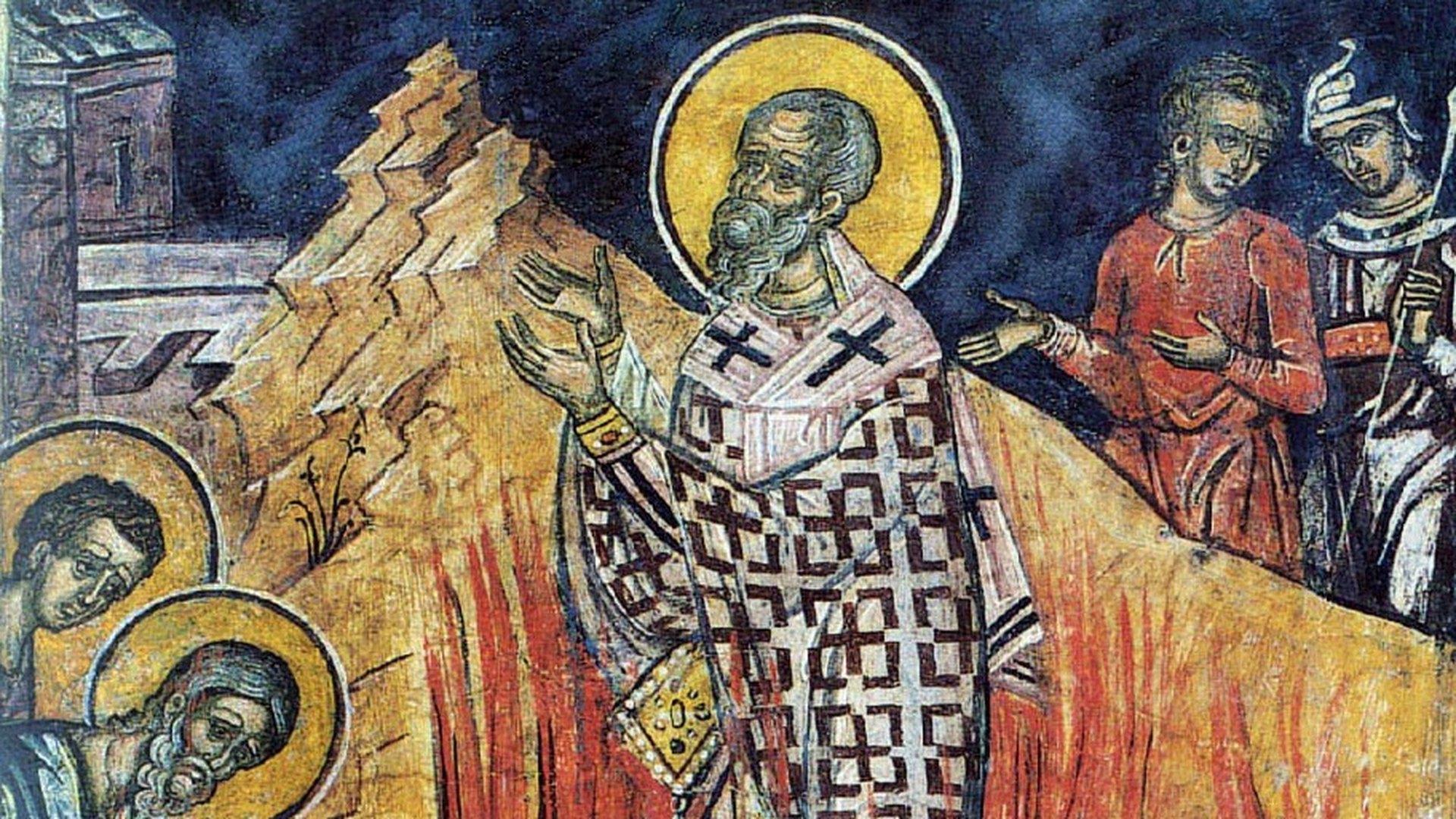
About forty-five years later, it was Polycarp’s turn. During the games at Smyrna, the crowd shouted for him. When soldiers found him at a farm, the old bishop ordered food for them and asked for an hour to pray. He prayed for two.
On the way to the stadium, an official urged him: what harm is there in saying “Caesar is Lord” and offering incense? In the stadium, the governor told him to curse Christ and go free. His answer is one of the most famous lines in early Christian history:
Eighty and six years have I served Him, and He never did me any injury: how then can I blaspheme my King and my Saviour?The Martyrdom of Polycarp 9, trans. Roberts and Donaldson
He asked not to be nailed to the stake. His church wrote that the fire curved around him like a ship’s sail filled with wind, and that an executioner finally killed him with a dagger (Martyrdom of Polycarp 7–16).
A philosopher in Rome: Justin Martyr
Around 165, a teacher named Justin stood trial in Rome with six other Christians. He had studied philosophy for years; what convinced him about the Christians was watching them face death without fear (Second Apology 12). The record of the trial survives. When the prefect Rusticus asked whether he really believed he would rise to heaven after being beheaded, Justin answered: “I do not suppose it, but I know and am fully persuaded of it.” All seven were whipped and beheaded (The Martyrdom of Justin).
Lyon, 177: Blandina
In 177, in Lyon in Gaul, the crowd turned on a whole church at once. Christians were shut out of the baths and the market, chased through the streets, and thrown into prison. Their bishop, Pothinus, more than ninety years old, died after being beaten. A deacon named Sanctus answered every question about his name, his city, and his status with the same words: “I am a Christian.”
The one the survivors remembered most was a slave woman, Blandina. Even other Christians feared she was too weak to hold out. Instead, her torturers wore themselves out from morning to night. She was exposed to beasts that would not touch her, placed on a heated iron chair, and finally thrown in a net to a bull. Afterward the bodies were burned and the ashes thrown into the Rhône, while the persecutors said: “Now let us see if they will rise again” (Eusebius, Church History 5.1).
Carthage, 203: Perpetua and Felicity
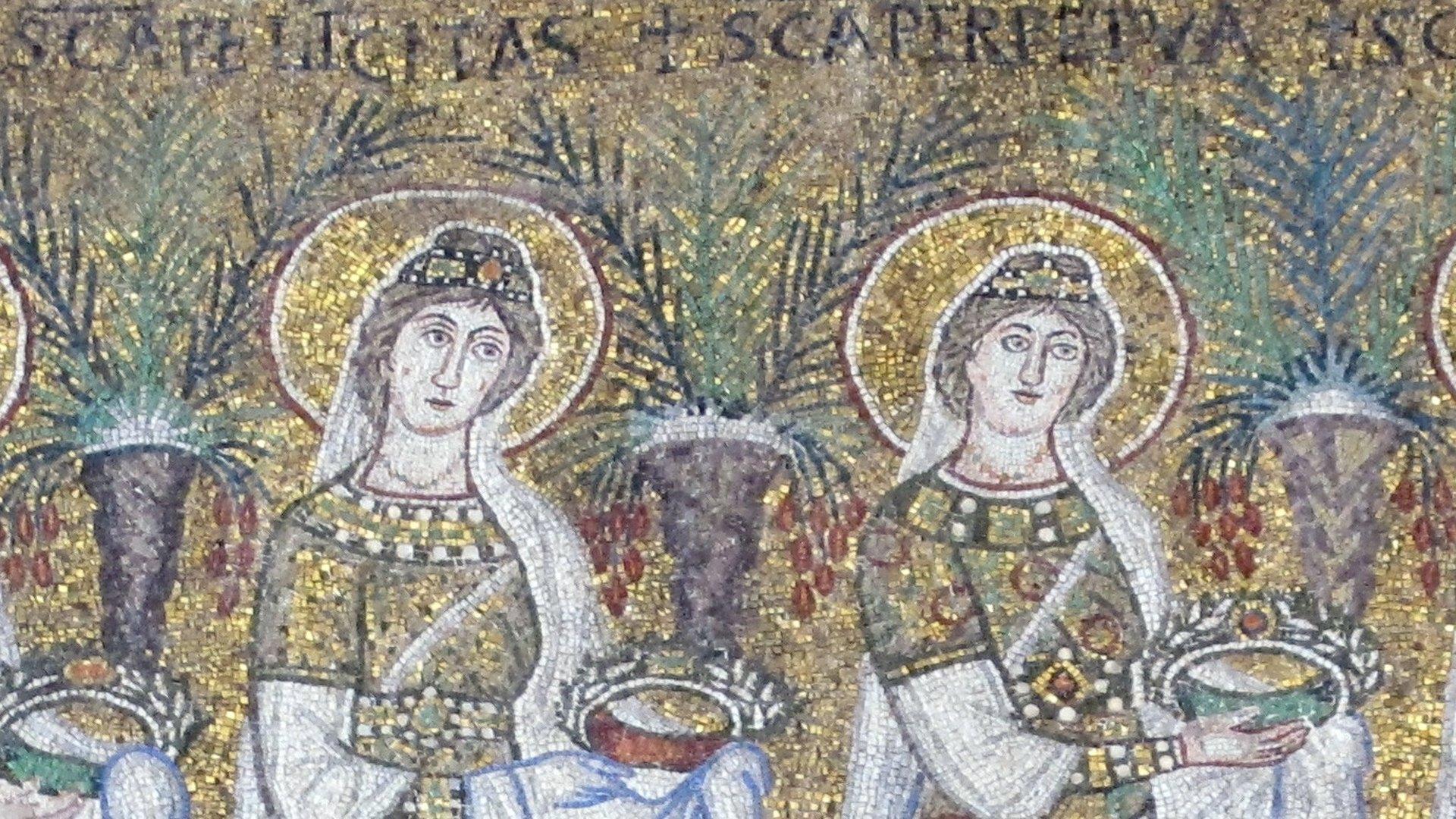
In Carthage, Vibia Perpetua was twenty-two, with a baby son, when she was arrested with four other new Christians. Part of her story is in her own words, written in prison: one of the oldest surviving writings by a Christian woman. When her father begged her to give up her faith, she pointed to a water jar and asked whether it could be called anything other than what it was:
Neither can I call myself anything else than what I am, a Christian.The Passion of Perpetua and Felicity, trans. R. E. Wallis
With her was Felicity, a slave, eight months pregnant, who gave birth in prison two days before the games. In the arena, when a wild cow threw Felicity down, Perpetua lifted her up, and the two stood side by side. When a young gladiator’s hand shook, Perpetua guided his sword herself (The Passion of Perpetua and Felicity).
The certificate: Decius, Valerian and Cyprian
Until 250, the attacks came in waves: one city, one governor, one crowd. Then the emperor Decius ordered everyone to sacrifice and to carry a certificate. For the first time, there was nowhere to hide. Some Christians rushed to sacrifice, some bought fake certificates, some fled, some were tortured until they gave in, and many refused. Later the church welcomed back those who had broken, once they repented.
In 257–258 the emperor Valerian targeted church leaders. In Carthage, the bishop Cyprian, who had gone into hiding during the first persecution, did not run this time. When his death sentence was read, he answered, “Thanks be to God.” He knelt, covered his own eyes, and asked that his executioner be given twenty-five pieces of gold (The Proconsular Acts of Cyprian). Two years later, Valerian himself was captured by the Persians, the first Roman emperor ever taken prisoner. He never returned.
The Great Persecution
Then came about forty years of peace. Christians built churches in the open and served in the army and even in the palace. It did not last. On February 23, 303, the feast of Terminus, the Roman god of boundaries and endings, soldiers broke into the great church at Nicomedia, the emperor Diocletian’s capital, burned its books, and tore the building down while Diocletian and Galerius watched (Lactantius, On the Deaths of the Persecutors 12).
Edict followed edict: first against churches and Scriptures, then against clergy, then against everyone. Eusebius, who saw it in Egypt, describes executioners whose swords grew blunt, and a small Christian town in Asia Minor burned with its people inside (Church History 8). In the East it lasted about eight years.
In 311, Galerius, dying of a terrible disease, ended the persecution and asked Christians to pray for him. In 313, Constantine and Licinius granted everyone freedom to follow the religion they chose, and the order was posted in Nicomedia, the city where the church had been torn down ten years before (Lactantius 34–35, 48).
Seed: why the faith only grew
About 280 years after Stephen fell under the stones, the persecutions were over, and there were more Christians than when they began. People had been watching. Even the Greek physician Galen, who was no Christian, noted that these people despised death. Justin had watched Christians die, and it changed him; then others watched Justin die.
A century before Diocletian, Tertullian had already warned the governors how it would end:
The oftener we are mown down by you, the more in number we grow; the blood of Christians is seed.Tertullian, Apology 50, trans. S. Thelwall
Why would anyone die rather than burn a pinch of incense? Because for them it was never small. To sacrifice to Caesar was to say that Jesus was not Lord. And they were sure of something Rome never understood: that Jesus had died and risen, and would raise them too. “Let us see if they will rise again,” the persecutors said at Lyon. The Christians believed they would.
Rome had swords, beasts, fire, and paper. The Christians had four words: I am a Christian. The little certificate from the beginning survived in the sand of Egypt. So did the faith it was used to test.