
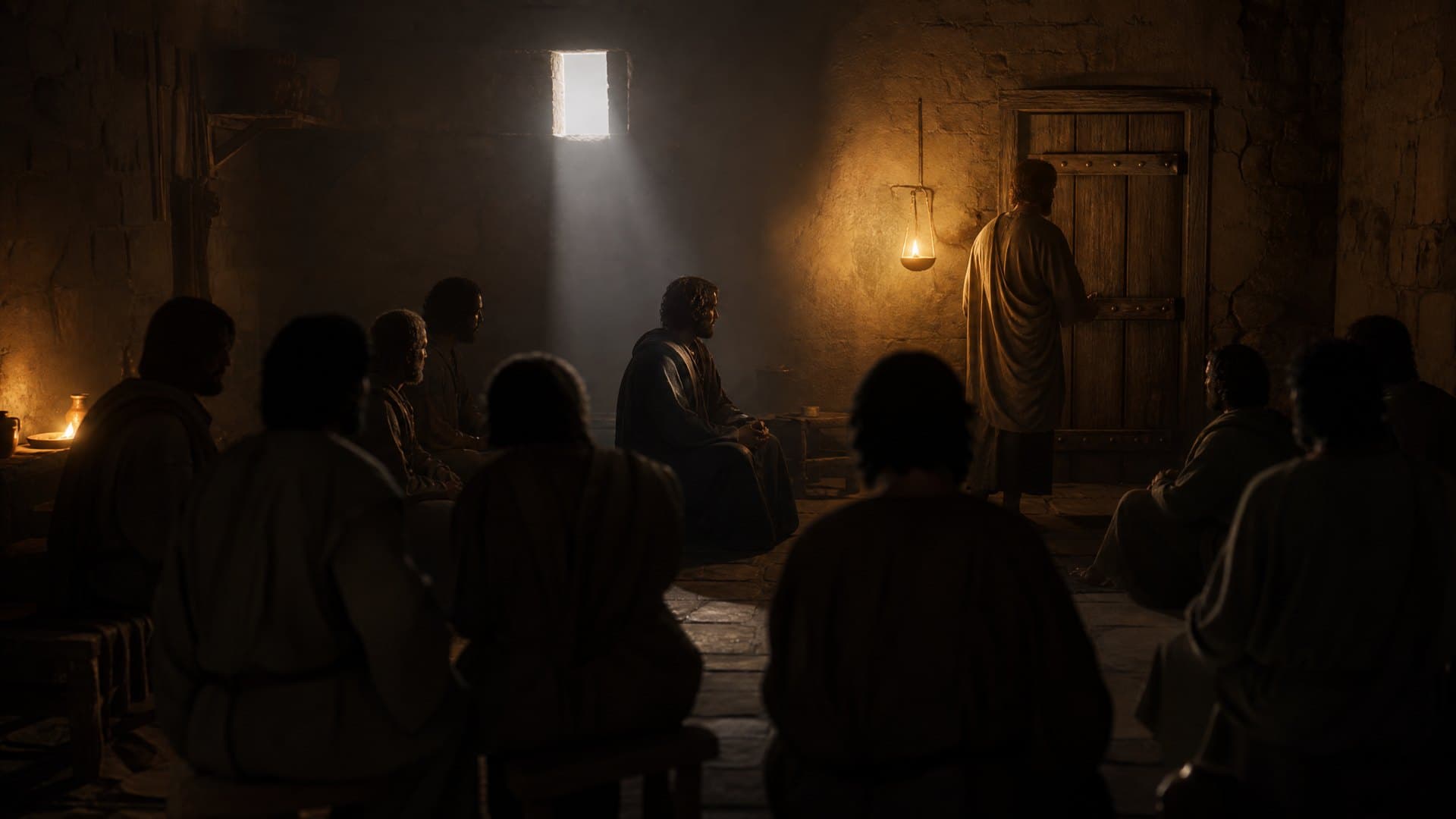
A locked room
The story begins with a closed door. Jesus has been executed, and his followers have reason to be afraid. John places them together on the evening of the first day of the week, with the doors shut for fear of the authorities. Peter has denied knowing Jesus. The public movement seems to have ended at a Roman cross. (John 20:19; Luke 22:54–62)
The film imagines the eleven remaining apostles in that room, around AD 33. The scene is a reconstruction: John does not give a headcount, and says Thomas was absent when Jesus first appeared. The crucifixion is commonly dated to AD 30 or 33. These details matter because the sources are more precise about the disciples’ fear than about the room itself.
By the early fourth century, a Roman emperor would identify with their faith. To understand that change, we must start with what these frightened people said happened next.
The empty tomb
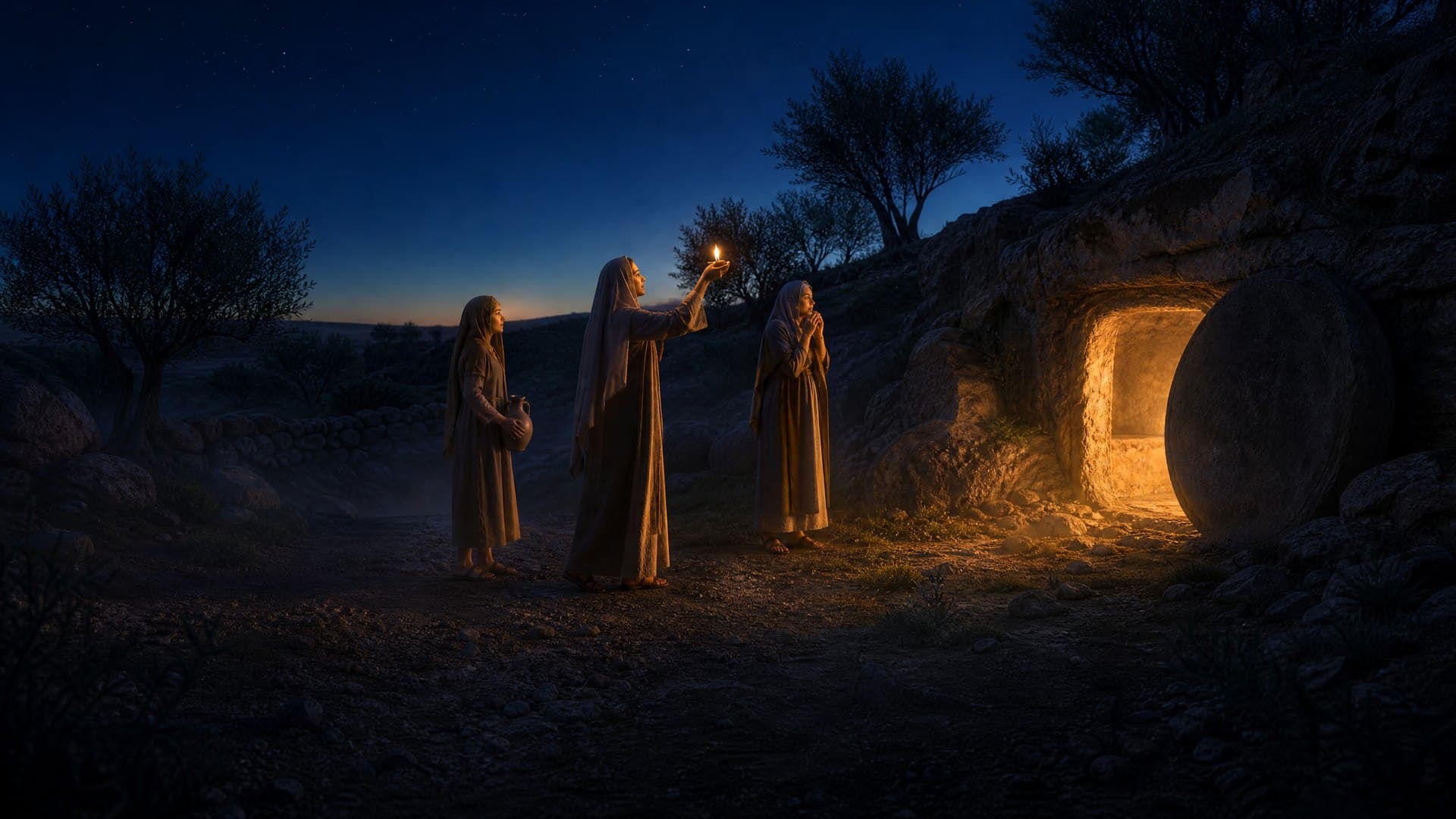
The Gospels give women the first place in the discovery of the empty tomb. Luke describes women arriving with prepared spices and finding the stone rolled away. John begins with Mary Magdalene coming while it is still dark. The accounts differ in their details, but agree that the discovery came before the disciples understood it. (Luke 24:1–12; John 20:1–18)
Luke says the apostles initially dismissed the women’s report. Their response was disbelief, not an immediate, organized announcement. Women’s social position in the ancient world makes their role striking, although sweeping claims that women could never testify need more qualification than the Gospel accounts themselves provide.
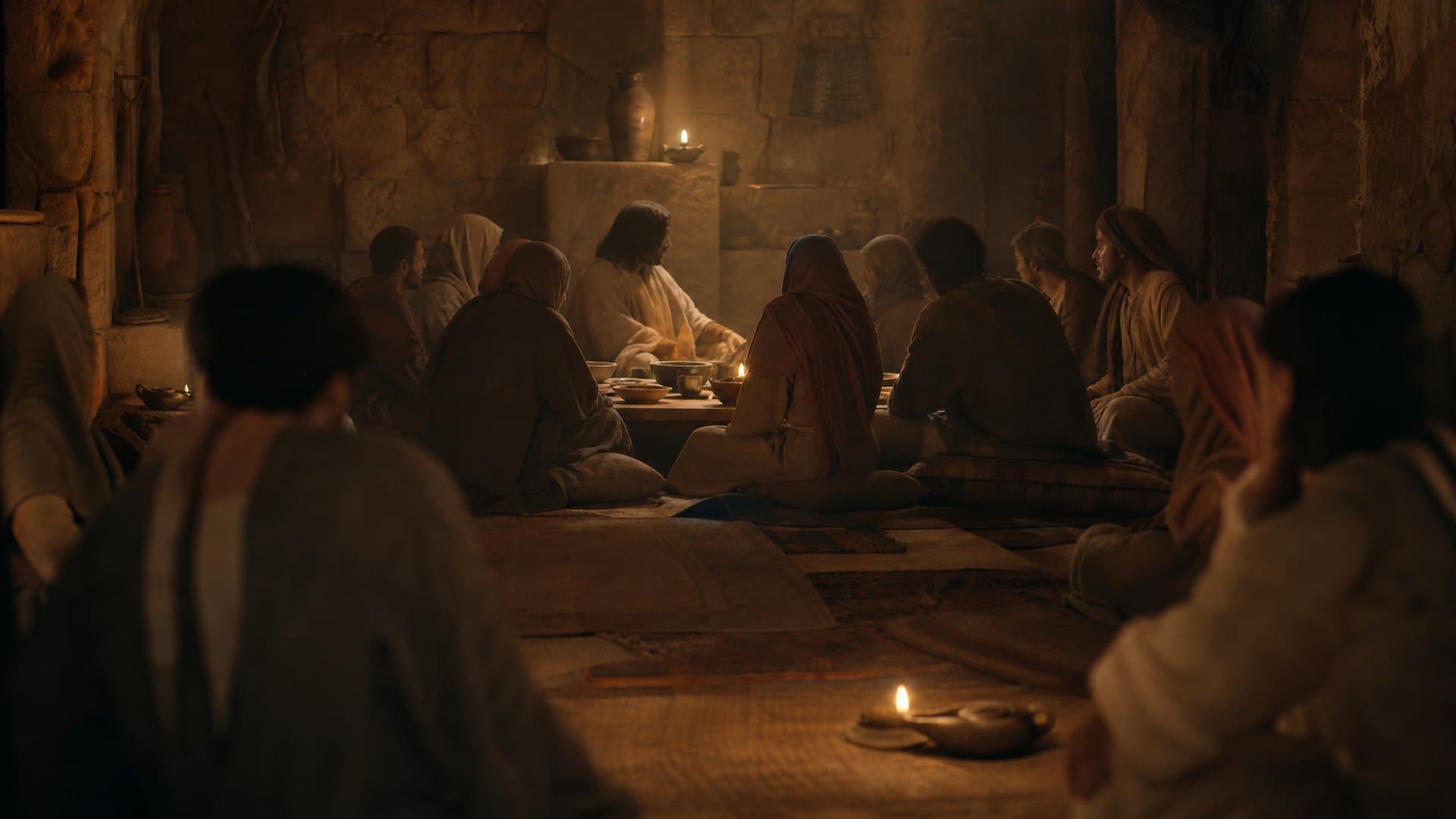
Then come reports of encounters: on the road to Emmaus, in a room with closed doors, and beside the Sea of Tiberias. John describes Jesus inviting Thomas to examine his wounds and preparing breakfast by the water. Acts summarizes a period of forty days of appearances. These are the sources’ claims, and they explain the conviction at the center of the movement. (Luke 24; John 20–21; Acts 1:3)
Pentecost
Jerusalem’s festival crowds provide the next setting. Acts names visitors from places as distant as Mesopotamia, Egypt, Rome, and Arabia. Into that multilingual gathering comes a sound compared to a violent wind, followed by what the writer describes as tongues like fire. The disciples begin speaking, and visitors hear them in their own languages. (Acts 2:1–13)
Some listeners are bewildered. Others accuse the speakers of drunkenness. Peter answers in public. The man remembered for denying Jesus now declares that God has raised him, and that the disciples are witnesses.
Acts reports that about three thousand people accepted the message and were baptized that day. This is the narrative’s own number, not a figure independently verified by a contemporary census. Still, the change in scale is central to the story: a small circle becomes a visible community in Jerusalem. Its new members devote themselves to teaching, fellowship, shared bread, and prayer. (Acts 2:14–42)
The Way
Before the name “Christian” appears, Acts speaks of people belonging to “the Way.” The first Jerusalem believers are Jewish, and their life still includes worship at the Temple. Following Jesus does not initially mean abandoning that setting. (Acts 2:46; Acts 9:2)
Their life together is unusually concrete. They meet in homes, share meals, and sell property to support those in need. Acts describes money being distributed according to people’s needs. Its emphasis falls on the removal of want within the community, rather than on possessions as a measure of status. (Acts 4:32–35)
All who believed were together, and had all things in common.Acts 2:44, World English Bible
This community is not without problems. A complaint arises that Greek-speaking widows are being overlooked in the daily distribution. Seven men, including Stephen, are appointed to address the need. The source preserves both the ideal of shared care and the work required to practice it. (Acts 6:1–6)
Pressure and the first martyr
Public preaching brings confrontation. Peter and John are arrested and ordered to stop speaking about Jesus. Later, the apostles are imprisoned again, beaten, and released. Acts says they leave rejoicing that they have been counted worthy to suffer for the name. (Acts 4–5)
Gamaliel, a respected teacher, urges caution. A movement of merely human origin will fail, he argues; a movement from God cannot be overthrown. His advice does not end the conflict.
Stephen is brought before the council and eventually stoned outside the city. Acts records him praying for his attackers. He is traditionally remembered as the first Christian martyr. A young man named Saul watches over the witnesses’ clothes and approves of the killing. (Acts 7:58–8:1)
Persecution then scatters believers beyond Jerusalem. According to Acts, those who leave continue preaching. Philip speaks in Samaria and later meets an Ethiopian official on the desert road. The account ends with the official going on his way rejoicing; it does not describe his later life in Ethiopia. The effort to suppress the movement has helped carry its message outward. (Acts 8)
The road to Damascus
Saul pursues the believers, entering houses and dragging people to prison. He obtains letters authorizing action against followers of the Way in Damascus. Before he arrives, the direction of his own life changes. (Acts 8:3; 9:1–2)
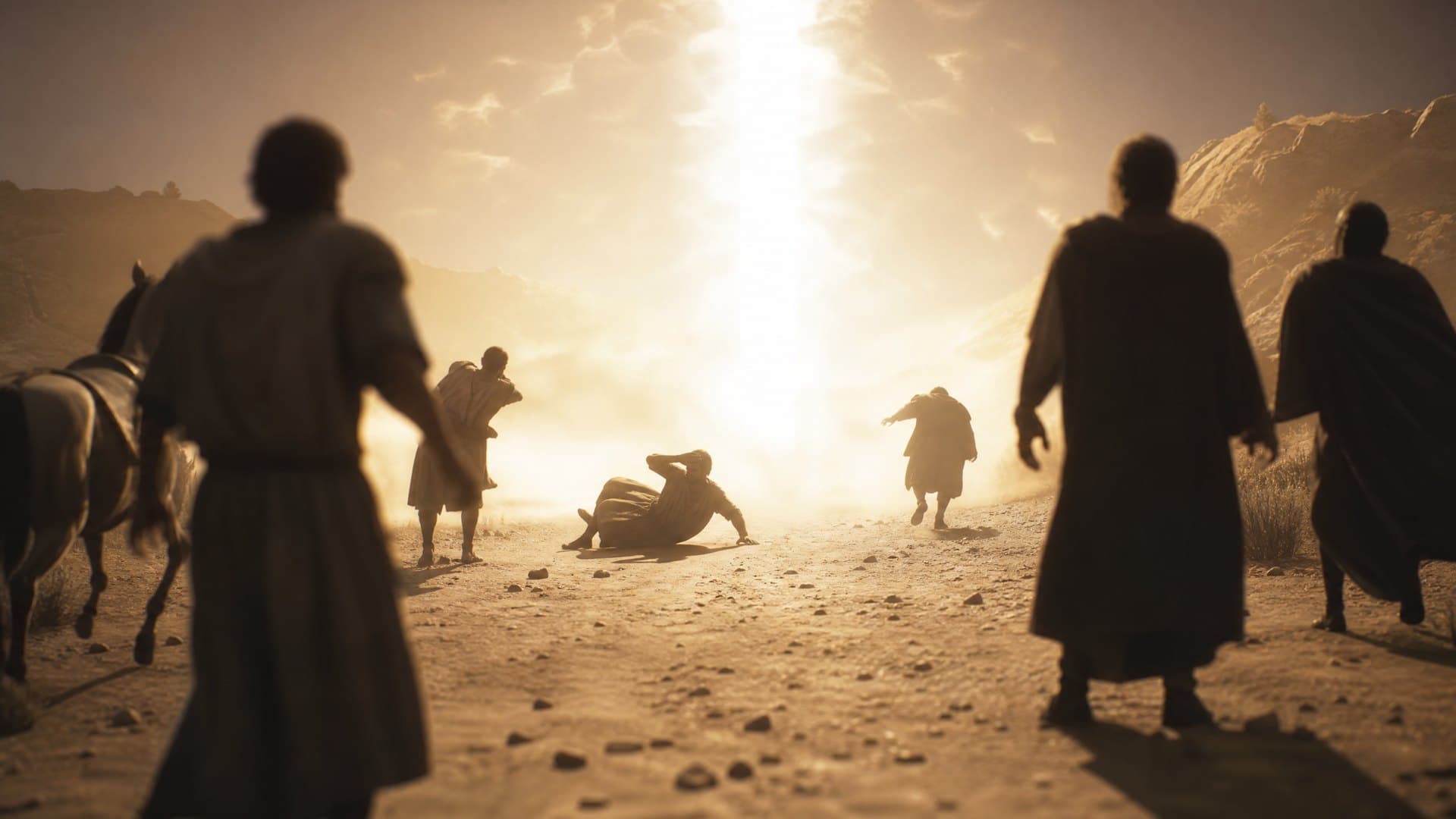
Acts describes a light from heaven and a voice asking why Saul is persecuting Jesus. Later retellings in Acts place the encounter at midday and describe light brighter than the sun. Saul rises unable to see. For three days he neither eats nor drinks. (Acts 9:3–9; Acts 22:6; Acts 26:13)
Ananias, a believer in Damascus, knows Saul’s reputation and voices his fear. Nevertheless, he goes, lays hands on him, and addresses him as a brother. Saul regains his sight and is baptized.
The persecutor becomes a preacher. We usually know him as Paul, but Acts does not describe a miraculous renaming: it introduces him as “Saul, who is also called Paul.” Both names belong to the same man. (Acts 9:10–22; Acts 13:9)
Antioch: the first 'Christians'
In Antioch, the movement reaches a new stage. Acts describes preaching beyond the original Jewish audience, followed by Barnabas bringing Saul to help teach the growing community. It is here, the writer says, that the disciples are first called Christians. Whether that name began as a nickname or an insult is not explained. (Acts 11:19–26)
The arrival of Gentile believers raises a difficult question. Must they be circumcised and required to keep the law of Moses? This is a dispute about belonging, with the potential to divide the movement.
At the Jerusalem meeting, conventionally dated around AD 49, the leaders reject imposing circumcision on Gentile converts. Their letter still gives specific instructions concerning food, idolatry, and sexual conduct. The decision is therefore more careful than a simple rejection of every rule. It makes room for Gentile believers without first requiring them to become Jewish. (Acts 15:1–29)
Paul's journeys and letters
The story now follows roads and sea routes: Cyprus, Galatia, Philippi, Athens, Corinth, and Ephesus. Acts describes preaching, arguments, arrests, and small communities taking shape across the eastern Mediterranean. The journeys are demanding, not a smooth procession of successes. (Acts 13–19)
Paul’s own letters give the hardship a personal voice. In 2 Corinthians he recalls three beatings with rods, a stoning, three shipwrecks, and a night and a day in the deep. He also describes anxiety for the churches. The work has a physical cost and an emotional one. (2 Corinthians 11:23–28)
The letters outlast their immediate circumstances. First Thessalonians is commonly dated to around AD 50 and is among the earliest surviving Christian writings. Calling it definitively the oldest would go beyond the evidence; the order and dates of some early letters are debated. These writings let us hear a movement already communicating across cities, well before the end of the first century.
64 AD: Rome burns
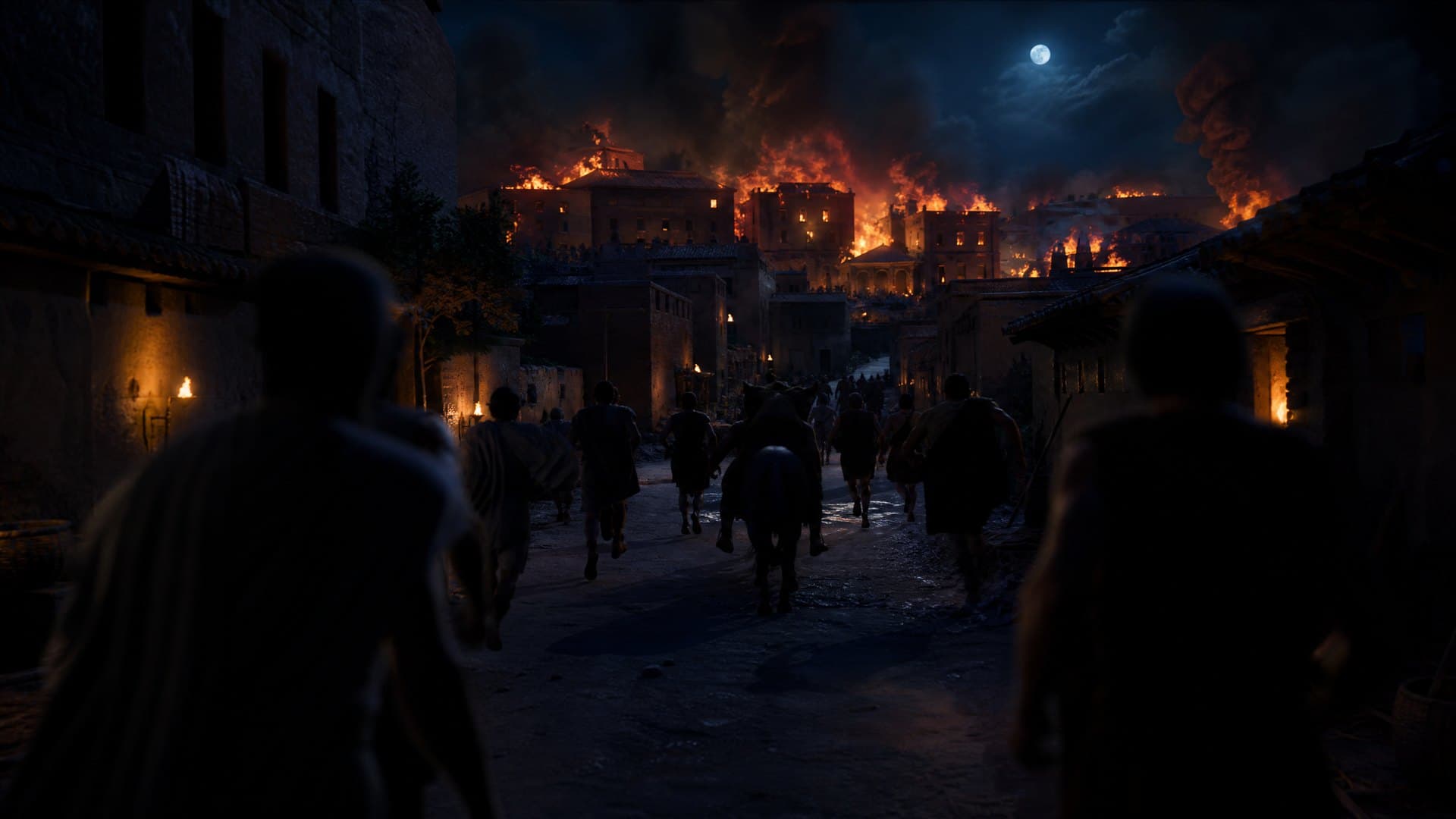
In July AD 64, a great fire devastates Rome. Tacitus describes a blaze brought under control on the sixth day, followed by another outbreak. Rumors persist that Nero is responsible. Tacitus reports that the emperor responds by fastening the blame on Christians. This is evidence for the accusation, not proof of who started the fire. (Tacitus, Annals 15.38–44)
Tacitus is hostile to Christianity, yet his description of the punishments conveys their cruelty. People are killed by dogs, crucified, and burned as nighttime illumination. He says sympathy arises because the victims appear to be sacrificed to one man’s cruelty rather than the public good.
Early Christian tradition also associates Peter’s and Paul’s deaths with Rome under Nero. Clement’s letter remembers their sufferings, but does not supply the detailed scenes found in later retellings. Exact dates and circumstances should remain qualified. Tacitus himself does not name either apostle in his account of the fire. (1 Clement 5)
What they left behind
In AD 70, Roman forces destroy Jerusalem’s Temple. Josephus describes the burning and destruction. The city at the center of the movement’s earliest chapters has suffered a catastrophe, but Christian communities already exist beyond it. (Josephus, The Jewish War, book 6)
Around AD 112, Pliny the Younger writes from Bithynia-Pontus to Emperor Trajan. He is investigating Christians and wants guidance. His letter preserves a description of people meeting before dawn on a fixed day and singing to Christ as to a god. They bind themselves against theft, robbery, adultery, broken promises, and refusing to return entrusted property. They also describe an ordinary shared meal.
The letter is not a friendly portrait. Pliny reports executions and the torture of two enslaved women described as ministers. His testimony shows both the recognizable practices of these communities and the danger of belonging to them. (Pliny, Letters 10.96)
What changed them?
The sources return us to the disciples’ central claim: they believed they had encountered Jesus alive after his death. Acts presents that conviction as the reason they continue speaking despite threats. Their answer is expressed in terms of what they have seen and heard. (Acts 4:20)
That belief becomes a shared life: prayer, meals, teaching, practical care, travel, and letters. Christian writings tell the story from within. Tacitus and Pliny show how the movement appears to Roman observers, with hostility and suspicion rather than sympathy.
The locked room is only the beginning. By the time Pliny writes, the story has become a question for the emperor himself.